Get Full Government Meeting Transcripts, Videos, & Alerts Forever!
Get email alerts on the Data Centers topic
No spam. Unsubscribe anytime.
Frederick County hears sustained public opposition as planning staff outlines data center report
Summary
Residents gave hours of public comment urging the Board of Supervisors to reject or tightly limit data centers; county planning staff summarized infrastructure, noise, water and fiscal trade-offs and said the Planning Commission asked the board to direct staff to draft policy and map potential locations. No board action was taken.
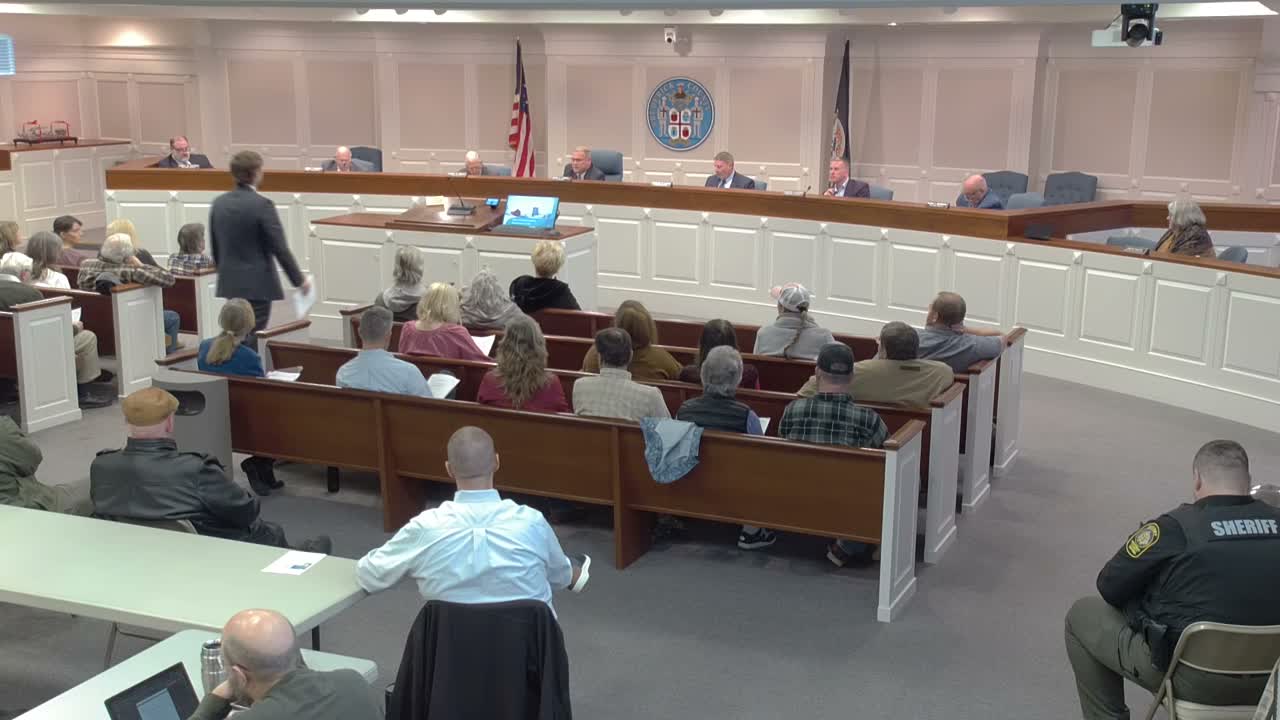
Frederick County officials heard more than a dozen residents urge caution or outright rejection of data center development at the Board of Supervisors meeting on Jan. 14, as county planning staff summarized a detailed fact sheet on the uses and recommended next steps.
Planning staffer Mr. Pearson presented a 22-page data center report that outlined two common development patterns (large campus-style and standalone structures), reviewed an April 2025 ordinance with performance standards, and highlighted likely impacts: high electrical demand, potential need for new transmission lines and substations that the county does not control, variable but sometimes substantial water use, and noise generated by cooling systems and standby generators. “This is presented only for information and discussion,” Mr. Pearson told the board. “You’re not required to take any action.”
The planning report noted data centers can generate unusually high taxable value because equipment inside buildings is taxable, and that several configurations of multiple centers or a 400-acre campus could produce revenue comparable to the county’s near-term capital needs. The presentation cited county figures showing roughly $394 million in capital needs and an additional $386 million in long-range school capital needs; Mr. Pearson said that a revenue stream from data centers could roughly match the debt service on that level of obligations.
Residents repeatedly told supervisors the local costs outweigh the benefits. Linda Reed of the Shawnee District said data centers would “require unsustainable water usage” and create noise, air quality and visual impacts; she noted a petition of about 1,400 signatures opposing the use. Tony Cole, a Back Creek District resident and retired chief technology officer, read from Virginia law and asked whether supervisors would “cast your vote based on the voices of what your constituents have indicated they want.” Liz Kasabian of Back Creek urged the board to require an independent analysis of how much power each proposed area can support and to disclose potential transmission routes before any zoning changes, and asked whether the county would sign nondisclosure agreements with developers.
Speakers raised technical questions that planning staff and supervisors addressed in turn. Mr. Pearson and supervisors discussed the role of regional transmission and the PJM market in setting generation and transmission realities, noted recent Virginia DEQ clarifications that can broaden generator testing in some circumstances, and emphasized the need for detailed, site-specific analyses if applications proceed. On water, Mr. Pearson said regional water-supply planning was underway but would not alone answer questions about sustainable groundwater carrying capacity; supervisors asked staff to invite Frederick Water to brief the board about available supply and existing withdrawals.
When asked about formal recommendations, Mr. Pearson said the Planning Commission recommended two motions: to direct staff to draft a data center policy for the comprehensive plan with strict guidelines to protect health and safety, and to amend the Future Land Use Map to identify where the county would consider data centers. Those recommendations were presented for deliberation at a future date; the board did not adopt either motion at the Jan. 14 meeting. A planning-related ordinance amendment and related measures are scheduled to come before the board on Jan. 28.
Board members repeatedly acknowledged the county’s large capital needs and the limited capacity of any single revenue source. “Data centers can’t be our silver bullet,” Supervisor Akins said, urging the board to pursue multiple revenue options and to weigh local impacts carefully. Several supervisors voiced support for community engagement and careful, case-by-case consideration if the county moves forward.
The board concluded the item without a formal vote on land-use changes; staff will return with additional briefings and any policy proposals if directed.