Get Full Government Meeting Transcripts, Videos, & Alerts Forever!
Get email alerts on the Rezoning Madison 277 topic
No spam. Unsubscribe anytime.
Frederick County planning commission recommends Madison 277 rezoning with proffers after weeks of public opposition
Summary
After extensive public comment raising lake, traffic and school concerns, the Frederick County Planning Commission voted to recommend rezoning 149 acres known as Madison 277 from RA to R‑4 with revised proffers that reduce housing, add buffers, phase build‑out and require intersection improvements; the item will go to the Board of Supervisors Feb. 11.
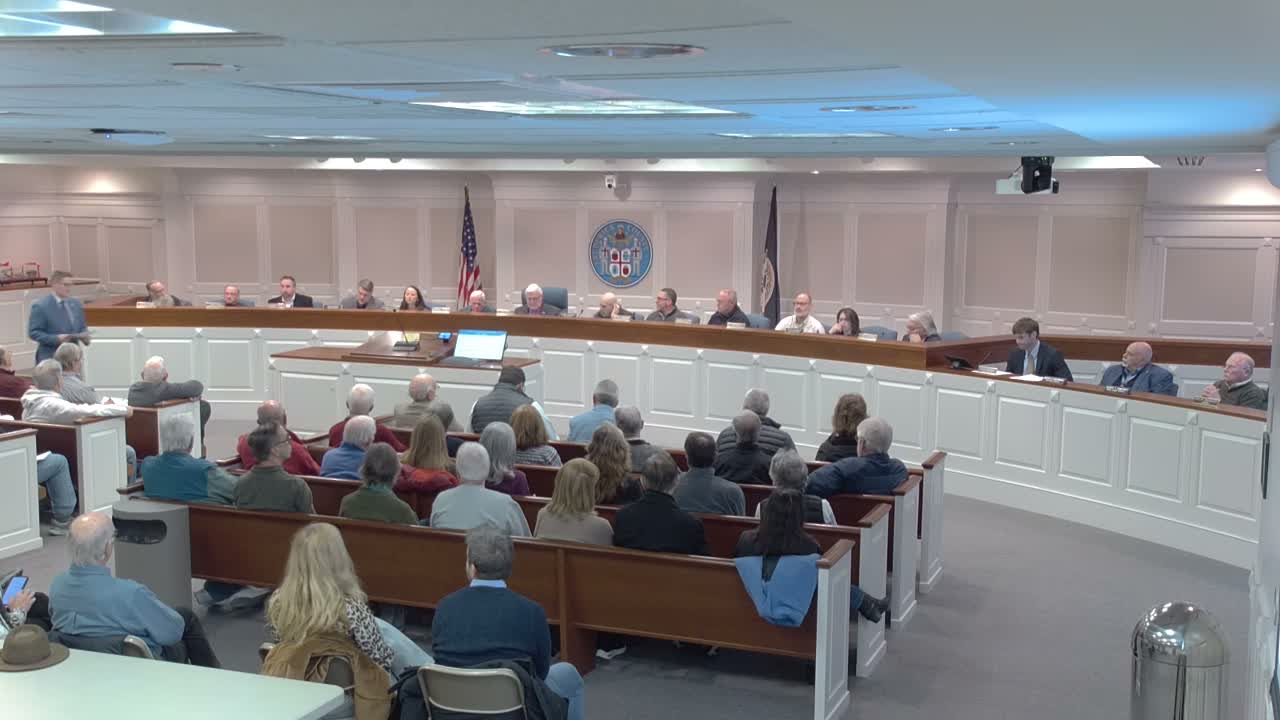
The Frederick County Planning Commission voted Jan. 21 to recommend the rezoning of a 149‑acre parcel known as Madison 277 from RA (rural area) to R‑4 (residential planned community), forwarding the item and revised proffers to the Board of Supervisors on Feb. 11.
Staff told the commission the applicant reduced the residential total from earlier proposals (about 866 units) to 596 units, split a 30‑acre commercial Land Bay 1 into two pieces with 1B restricting roughly 50% of that acreage to medical uses, removed age‑restricted multifamily from Land Bay 1, added a 25‑foot mature woodlands buffer where the site abuts Lake Frederick, and committed to construct warranted intersection improvements at Hudson Hollow/White Oak/Route 277 per the project’s traffic impact analysis (TIA). Mr. Klein, staff, summarized the changes and said the revised proffers “fully commit to the implementation of improvements that would be required by [the] signal justification report.”
Residents who live around Lake Frederick pressed the commission during public comment for stronger protections for the lake and for traffic buffering. Marv Davis, chair of the Madison working group and a Lake Frederick resident, said a large majority of neighbors “do not support the rezoning at this time” and warned that “hope is not a strategy” when it comes to infrastructure and school impacts. Bill Moore, of the Lake Frederick Conservation Club, said the lake is a 117‑acre public resource and described at least 10 flow routes from the rezoning parcel into the lake, saying erosion control “is far from perfect and often completely inadequate.” John Tolliver, a retired forest scientist and vice president of Friends of Lake Frederick, urged preserving land bordering the lake or converting it to public open space to reduce long‑term siltation risk.
Commissioners questioned enforcement and jurisdictional issues, including whether Frederick County can collect proffer funds for improvements that lie outside county limits; staff said the county could add a project to the CIP and funnel funds through the MPO where appropriate, though the county has not historically done so. Commissioners also asked whether the Virginia Department of Environmental Quality had reported water‑quality degradation; staff responded they had no notice of DEQ actions and emphasized that subdivision review requires erosion and sediment control and stormwater management plans that county public works actively reviews and monitors during construction.
Several commissioners expressed concerns about school capacity and traffic. Commissioner LaManna noted Sherando High School and feeder middle schools are over capacity; other commissioners said the commercial and medical commitments—Valley Health indicated interest in an urgent/family care facility—could provide long‑term community benefits while acknowledging that a full fiscal analysis showing commercial revenue offset was not available. Staff said the county’s capital‑impact model incorporates expected commercial development for capacity calculations, but noted the state code limits what the county may collect in impact fees.
After discussion, Commissioner Botolph moved to recommend approval of rezoning O7‑25 (Madison 277) with the revised proffers dated January 2026. The motion passed on a roll‑call vote with a majority of commissioners voting yes and Commissioner Whitaker voting no; the chair cast a vote in the affirmative and the motion carried. The item will be considered by the Board of Supervisors on Feb. 11.
What happens next: the Board of Supervisors will review staff recommendations, the proffered commitments and public comments on Feb. 11; any final approvals there will determine zoning, required construction of proffered improvements and the formal timing of project phasing.