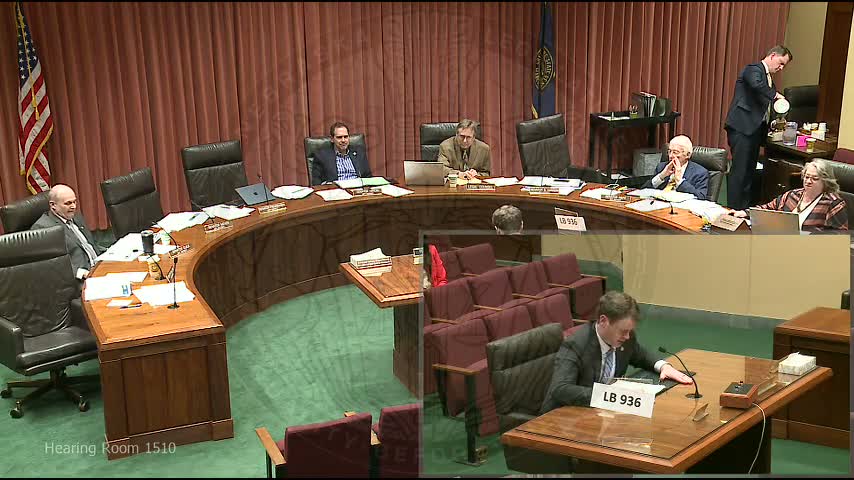
Debate in committee over LB936: trained nurse practitioners seek authority to use fluoroscopy; radiographers push for stricter education and collaboration rules
Loading...
Summary
LB936 would let trained nurse practitioners perform and direct fluoroscopy after completing DHHS‑approved education and supervised procedures. Supporters said a 407 review and broad stakeholder outreach validated the change and would improve rural access; radiographers and safety advocates urged statutory language requiring defined education standards and on‑site collaboration to protect radiation safety.
Sen. Beau Ballard introduced LB936 to update Nebraska credentialing statutes after a DHHS 407 review found that nurse practitioners (NPs) who complete approved education and supervised clinical experience can safely perform and utilize fluoroscopy for procedural guidance.
Jillian Negri of Nebraska Nurse Practitioners described a 15‑month 407 credentialing review and outreach with health‑care partners that she said resulted in technical compromises and support from many stakeholder organizations. Negri and other NP proponents told the committee that the authority would align Nebraska with 22 other states where NPs can perform fluoroscopy and argued the change is important for specialty care and rural hospitals that rely on NPs to provide services.
Radiographers and the Nebraska Society of Radiologic Technologists urged caution and opposed the bill as written because they said the statutory language does not require clear education, clinical‑training minima or an explicit requirement that a licensed medical radiographer be present for fluoroscopy procedures in all settings. Radiographer witnesses described comprehensive degree and clinical‑training pathways for imaging professionals and emphasized ALARA (as low as reasonably achievable) radiation‑protection standards. The Society recommended model standards used in states such as Colorado and California, including specific hours of didactic and clinical training and standardized competency testing.
The Nebraska Medical Association testified neutrally and encouraged robust education and training requirements, pointing to model state pathways that require 40 hours of education and clinical experience plus national exam certification. Committee members asked about the 407 process, interstate reciprocity, and what concrete training would be required; proponents pointed to a commonly available four‑hour didactic course plus supervised procedures required by regulation, while opponents cited longer training frameworks in some states and urged explicit statutory guardrails.
Senators said they valued the 407 process but also asked parties to work on language that ensures patient safety while preserving rural access and workforce flexibility. No committee vote was taken at the hearing.