
Nebraska committee hears heated testimony on bill tying third‑grade promotion to reading proficiency
Get AI-powered insights, summaries, and transcripts
Subscribe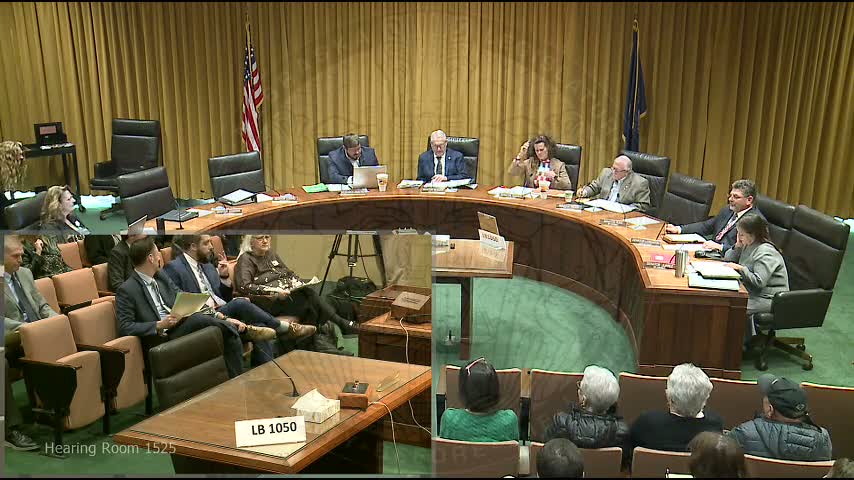
Summary
Sen. Dave Mermin introduced LB 1050, which would require the Department of Education to set a third‑grade reading threshold, expand early interventions and permit retention for students with persistent reading deficiencies. Supporters cited Mississippi-style gains; educators warned mandatory retention is an unfunded, blunt tool.
Sen. Dave Mermin (R‑38th District) introduced LB 1050 in the Legislature’s Education Committee, saying the bill would require the Nebraska Department of Education to set assessment criteria to identify third‑grade students with a “persistent reading deficiency” and require intensive, evidence‑based interventions for those students, with retention at third grade only as a last resort. "If students aren't ready for that transition, they tend to really suffer academically," Mermin said in his opening remarks, citing Mississippi’s turnaround on NAEP scores as a model.
The bill would direct intensified supports — smaller student‑teacher ratios, individualized instruction, dyslexia screening and frequent diagnostic monitoring — for students identified as not meeting the threshold. Mermin and a representative from the governor’s policy office described the proposal as complementary to an existing federal grant the state is using for literacy coaching and teacher training; supporters repeatedly framed retention as part of a broader accountability and early‑intervention system rather than a punitive measure.
"A child who cannot read by third grade is not failing the child. The system is failing that child," said Heather Schmidt, a parent and proponent, who urged mandatory dyslexia screening and amendments that would require targeted interventions when dyslexia is identified.
Opponents ranged from local teachers to statewide associations. Mary Yilk, testifying for the Nebraska Association of School Boards, told the committee, "Retention is not an intervention," citing long‑term studies that show retention often fails to improve outcomes and may increase dropout risk. The Omaha Education Association and Nebraska State Education Association urged caution, saying the bill creates a massive unfunded mandate: supporters repeatedly referenced a fiscal note that earmarked roughly $800,000 for testing while pointing to a larger $55 million federal literacy grant for teacher training and interventions.
Educators and school administrators pressed lawmakers on implementation details: how the Department of Education would set thresholds, how dyslexia and English‑learner students would be treated, and whether districts have capacity to deliver the intensive acceleration classes the bill mandates. Several witnesses suggested phased implementation, clearer exemptions for students who are English learners or have disabilities, and amendments to ensure interventions are available well before third grade.
Neither the committee nor proponents presented a formal amendment or vote at the hearing; lawmakers heard more than a dozen proponents and opponents and left the bill open for revision. The committee will weigh potential amendments that clarify assessment criteria, funding and exemptions before any further action.