
Bill would centralize higher‑education pay data to aid recruitment and bargaining
Get AI-powered insights, summaries, and transcripts
Subscribe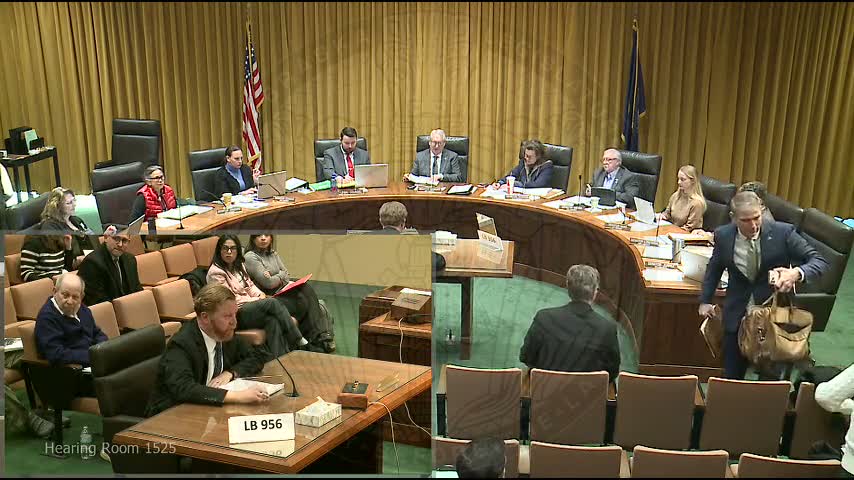
Summary
Sen. John Kavanaugh’s LB956 would require the Coordinating Commission to compile aggregate compensation data from postsecondary institutions so institutions, unions and policymakers can compare pay and benefits; supporters said current market data is siloed behind proprietary services.
Sen. John Kavanaugh (LD9) told the Education Committee LB956 would direct the Coordinating Commission on Post‑Secondary Education to collect and verify aggregated compensation information from public postsecondary institutions to inform recruitment and retention. "This would not be searchable by name," Kavanaugh said, stressing the policy’s emphasis on aggregated, class‑level reporting rather than individual records.
Tim Royers, president of the Nebraska State Education Association, testified in support, saying comparable pay data at the postsecondary level is difficult to get and often locked behind proprietary vendors such as CUPA. "CUPA data...provides all the essential data to effectively determine comparability," Royers said, adding unions are often blocked from licensing that dataset and that LB956 would require institutions to share broad aggregate information to support bargaining and workforce planning.
Committee members asked whether the information already exists in public records and raised privacy concerns. The coordinating commission’s anticipated cost to compile and host the dataset was discussed in committee questions; members noted a modest fiscal note (about $10,500) for publishing aggregated reports online. Kavanaugh said he will work with the commission on technical language to address practical concerns about collection and confidentiality.
The hearing record included proponents (including higher‑education and labor representatives) and a neutral coordinating commission response on technical issues; no formal committee action occurred at the hearing.