
After Tyson plant closure, lawmakers hear bill to require state WARN notices for mass layoffs (LB921)
Get AI-powered insights, summaries, and transcripts
Subscribe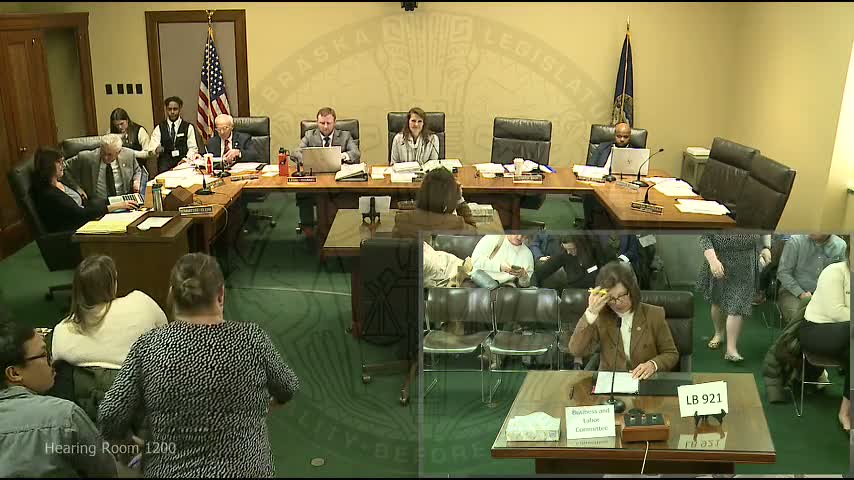
Summary
LB921, patterned on Iowa law, would require employers to notify workers and the Department of Labor in mass layoffs or closures affecting 25 or more full-time employees (60 days notice proposed, floor amendment would extend to 90); Lexington community members urged stronger notice, access to policies, privacy protections, and possible severance, while business groups warned about burdens on small employers.
Sen. Teresa Ibach introduced LB921 to adopt a Nebraska Worker Adjustment and Retraining Notification (WARN) Act that would set a state-level notice requirement for mass layoffs and closures affecting 25 or more full-time employees. The bill was offered in direct response to the Tyson Foods plant closure in Lexington, which affected thousands of workers and prompted community calls for earlier warning and support.
Under the bill as drafted, employers would provide 60 days’ notice to employees and the Department of Labor for qualifying mass-layoff events; the sponsor said she has filed a floor amendment to increase that to 90 days. LB921 would also make modest changes to the state Non-English Speaking Workers Protection Act by adding duties for employee referral agents to maintain community contact lists and help affected workers access services.
Rose Golinis, a Lexington constituent and volunteer organizer, gave detailed proponent testimony describing workers’ experiences after the Tyson closure: she said workers received little advance notice, lacked access to employee handbooks when the company intranet was shut down, and asked for amendments such as notice to local elected officials, privacy protections for employee contact information, requirements that any alternative employment offered be full time at equal pay, and consideration of state-level severance obligations.
Nick Grandgenette of Nebraska Appleseed urged language to ensure notices are provided where workers will see them and in languages they understand, to use the statewide registry for interpreters, to increase civil penalties (to deter noncompliance) and to add anti-retaliation protections. Business groups represented by Ryan McIntosh (NFIB and chambers) opposed LB921’s current thresholds and penalties, saying a 25-employee trigger is too low and that strict daily penalties risk discouraging investment; McIntosh recommended setting thresholds at or above the federal WARN standards.
Sen. Ibach acknowledged the bill was modeled on Iowa law, thanked Lexington residents for their advocacy, and said she is open to negotiating thresholds and amendments. The committee did not vote; members posed questions about thresholds, penalties, language access, and operational implementation.