Get Full Government Meeting Transcripts, Videos, & Alerts Forever!
Get email alerts on the Gaming Tax topic
No spam. Unsubscribe anytime.
Cities and counties urge Legislature to cut state keno remittance to shield local projects
Summary
Mayors and municipal groups told the General Affairs Committee that LB782—reducing the state share of local keno remittance from 2% to 1%—would help communities hit by nearby casino openings; the Department of Revenue warned of a multimillion-dollar revenue loss for enforcement and the state general fund.
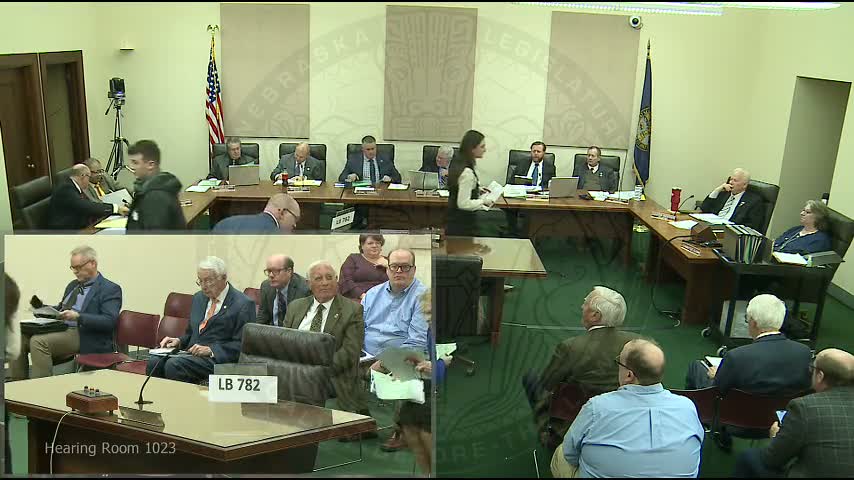
Senators heard LB782, a bill to reduce the quarterly state remittance from keno operated by municipalities and counties from 2% to 1%, amid testimony from municipal officials and the Department of Revenue.
Don Grosser, mayor of Ralston, said Ralston’s annual keno handle fell from about $32,000,000 to $27,000,000 after War Horse Casino opened in Omaha nine blocks from Ralston’s keno parlor. "Our keno is down about 16 percent," Grosser said, describing the Liberty First Credit Union Arena as a major community asset that relies on keno proceeds for upkeep.
Lynn Rex of the League of Nebraska Municipalities and John Cannon of the Nebraska Association of County Officials said many of the 185 municipalities and counties with voter-approved keno rely on proceeds for parks, libraries, infrastructure and public safety. Rex cited the 2025 Charitable Gaming Division annual report showing a record in casino revenue nationally and noted casinos’ rapid growth in Nebraska.
Brian Rockey, director of the Charitable Gaming Division in the Department of Revenue, testified in a neutral capacity and provided statewide fiscal context: keno wagers for the fiscal year were about $337,697,690; municipalities received roughly $26.8 million (about 7.96%) last year; revenue collected from the 2% tax declined to about $6,753,954. Rockey estimated that cutting the tax in half would reduce enforcement and compliance funding by roughly $1.3 million and reduce the state general fund by about $1.9 million.
Committee members questioned how keno licensing and local control operate, whether casinos currently host keno and the geographic pattern of declines; Rockey said municipalities set the number and locations of parlors and that most keno activity is concentrated among the largest operators (Omaha, Lincoln, Ralston and La Vista).
The hearing closed without a committee vote. If advanced, LB782 would shift more proceeds to local governments but reduce state compliance funding and general-fund receipts, according to the Department of Revenue.