Get Full Government Meeting Transcripts, Videos, & Alerts Forever!
Get email alerts on the Hydrogen Water Use topic
No spam. Unsubscribe anytime.
Committee advances bill to bar using potable or irrigation water to produce hydrogen, agrees to draft regional and wastewater exceptions
Summary
Lawmakers advanced 26LSO0178, a draft statute declaring molecular destruction of water to produce hydrogen is not a "beneficial use;" the committee approved conceptual amendments to allow regional exceptions in over‑appropriated basins and carve‑outs for wastewater/produced water to be drafted before session, and advanced the bill on roll call.
The Select Water Committee advanced a working draft that would bar using Wyoming’s potable or irrigation water to destroy water molecules for industrial hydrogen production, while directing staff to draft narrowly targeted exceptions.
LSO described the proposal as an addition to W.S. 41‑3‑101: the bill would state that ‘‘the destruction of water molecules by separating the hydrogen and oxygen atoms for the purposes of the industrial production of hydrogen shall not constitute a beneficial use of water.’’ Companion language would allow ordinary evaporative losses and would prevent issuance, transfer or perfection of water permits or certificates for such molecular destruction unless expressly authorized by law.
Sponsor Senator Steinmetz said the measure responds to proposed large hydrogen projects in Niobrara and Converse counties and asked the committee to protect scarce irrigation and potable supplies. "Water is one of our most valuable and rarest commodities," he said, and argued that other feedstocks (natural gas, coal, or wastewater) could produce hydrogen without consuming state water rights.
Public and municipal testimony raised a practical counterpoint: Brad Brooks of the City of Cheyenne Board of Public Utilities said Cheyenne has an MOU with a hydrogen company seeking to reserve wastewater effluent for a potential project. Committee members therefore directed staff to prepare conceptual carve‑outs: (1) tie the prohibition to defined water‑scarcity or over‑appropriated control areas (regionalization) so unaffected basins could still consider projects; and (2) allow use of wastewater or other non‑potable streams (produced water) through carefully drafted exceptions.
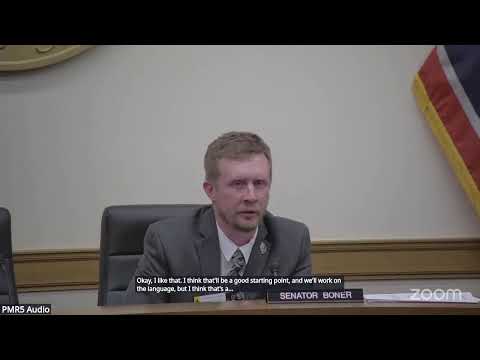
After debate and the conceptual directions for amendments, the committee took a roll call vote and advanced the bill as amended; the recorded tally was 9 aye and 4 no. The committee tasked staff to translate the conceptual exceptions into precise statutory language before the budget session so members can consider basin‑specific and wastewater carve‑outs.
Next steps: LSO will draft regional and wastewater exceptions; committee will consider finalized language in the coming weeks before the budget session.