Get Full Government Meeting Transcripts, Videos, & Alerts Forever!
Get email alerts on the HB232 Minor Consent topic
No spam. Unsubscribe anytime.
Hearing on lowering mental‑health consent age to 16 draws wide testimony; bill limited to five counseling sessions
Summary
Senator Kathy Giesel and sponsors introduced HB 232 to allow 16‑ and 17‑year‑olds up to five outpatient behavioral‑health sessions without parental consent, with no medication permitted; testimony from school, advocacy and provider groups highlighted access barriers, suicide risks and implementation questions. The committee set the bill aside for a future hearing.
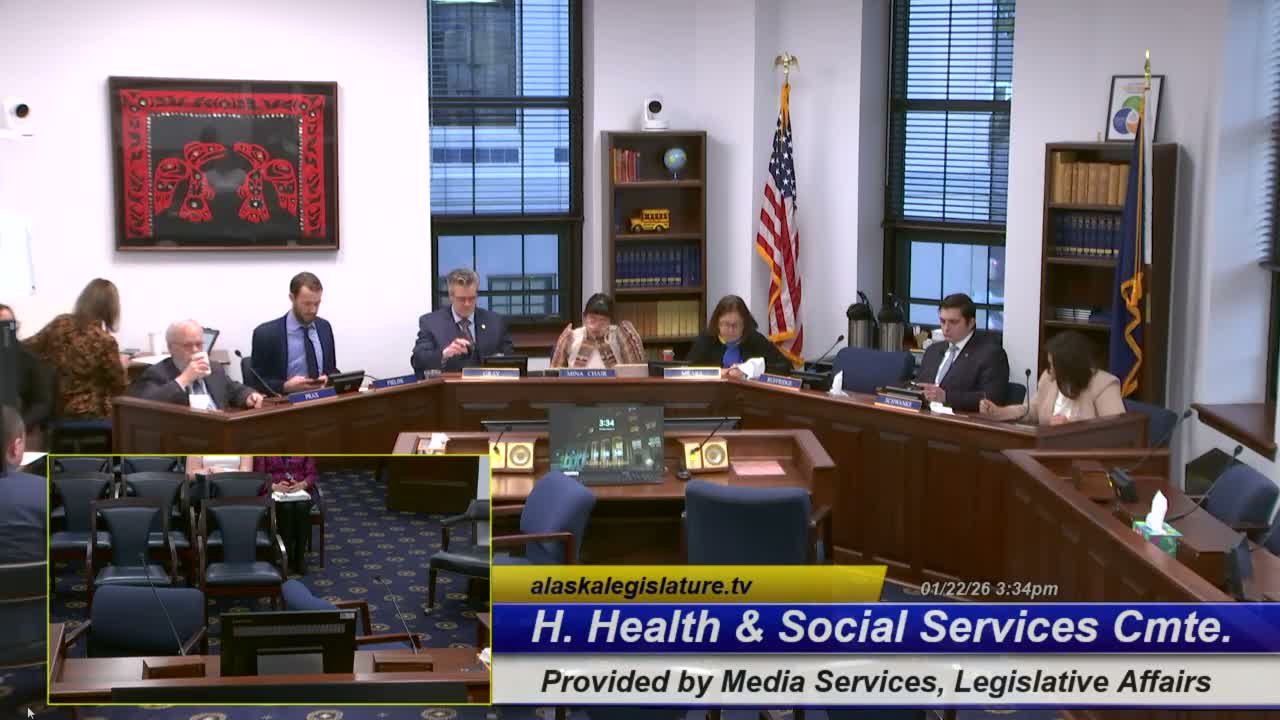
Senators and advocates told the House Health and Social Services Committee on Jan. 22 that House Bill 232 aims to expand short‑term access to behavioral‑health care for 16‑ and 17‑year‑olds by allowing them to consent to up to five outpatient behavioral‑health sessions without parental permission.
Senator Kathy Giesel, who presented the measure, said the bill "opens the door to allow individuals aged 16 and older to access mental health services" and described rising rates of anxiety, depression and suicidal ideation among Alaska youth since the COVID‑19 pandemic. Giesel stressed the bill’s limits: the measure permits up to five counseling sessions without parental consent and expressly prohibits prescribing medication during that short window.
Supporters who testified included Theresa Roble of the Alaska Children's Trust, Lance Johnson of the Alaska Behavioral Health Association, Heather Ireland of Anchorage School Based Health Centers, and a student, Bella Ginter Chavez of South Anchorage High School. Roble said HB 232 "creates a critical pathway" for young people who cannot safely obtain parental consent and cited Kids Count data showing an increase in reports of persistent sadness among Alaska high‑school students. Johnson, representing community behavioral‑health providers, urged multiple access points (community clinics, school sites and telehealth) and recommended clarifying statutory definitions so behavioral‑health and substance‑use services are included where clinically appropriate.
Witnesses described practical barriers in school settings: Ireland said parental consent requirements are a significant obstacle for many students who want help in school clinics, estimating about 75 percent of students referred enroll and that parental consent practices exclude a meaningful share of youth who need care. Student testimony from Bella Ginter Chavez recounted peers in crisis and a friend who attempted suicide; she urged lawmakers to give students timely means to seek help.
Committee members probed implementation details: Representative Breffridge asked how the bill's provision that "a minor is relieved of financial obligations to the provider" would work; sponsors and witnesses said billing typically goes to a student's insurance (often Medicaid) and that pro bono or grant funding covers gaps. Members also asked whether the five‑session limit, the age threshold and documentation requirements (including rules for unaccompanied homeless youth) struck the right balance between access and parental involvement.
Paige Brown, staff to Senator Giesel, read statutory language that would add documentation paths for unaccompanied homeless minors and permit a provider to continue services beyond five sessions only under narrow circumstances (for example, if contacting a parent would be detrimental or if continued care is documented and periodically re‑evaluated). The bill as presented sets an effective date of Jan. 1, 2026.
Chair Representative Mina did not take a committee vote on HB 232 at this meeting; she set the measure aside for a future hearing.
What’s next: The bill will return for additional hearings and technical review; committee members asked staff and sponsors to clarify billing, definitions of behavioral‑health services and the documentation pathway for homeless or unaccompanied minors.
Sources: Sponsor presentation, invited testimony from Alaska Children's Trust, Alaska Behavioral Health Association, Anchorage School Based Health Centers, student testimony, and staff bill‑section reading to the House Health and Social Services Committee, Jan. 22, 2026.