Get Full Government Meeting Transcripts, Videos, & Alerts Forever!
Civil Division absorbs labor-relations unit; statehood-defense funding and federal cases remain under review
Summary
Deputy AG Corey Mills told a Jan. 26 subcommittee that the labor-relations unit transferred into the Department of Law following an administrative order, positions have been filled including a non-attorney supervisor, and that statehood-defense funding mechanics and pending federal litigation (including the roadless rule) may drive future budget pressures.
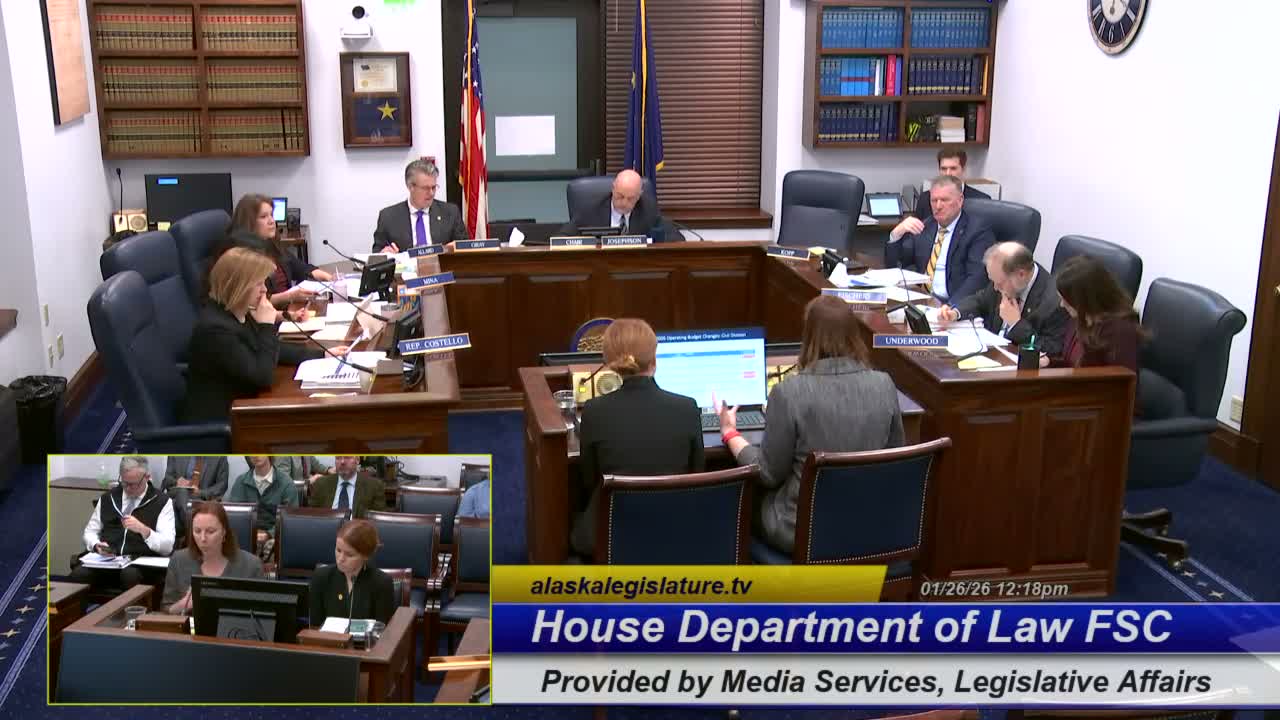
Corey Mills, deputy attorney general overseeing the Civil Division, told the House Finance subcommittee on Jan. 26 that the labor-relations unit has been moved into the Department of Law through an administrative order and follow-up budget actions and that the transferred positions are now filled.
Mills said the transfer brought four positions into the department but a supervisory attorney…
Already have an account? Log in
Subscribe to keep reading
Unlock the rest of this article — and every article on Citizen Portal.
- Unlimited articles
- AI-powered breakdowns of topics, speakers, decisions, and budgets
- Instant alerts when your location has a new meeting
- Follow topics and more locations
- 1,000 AI Insights / month, plus AI Chat