Get AI Briefings, Transcripts & Alerts on Local & National Government Meetings — Forever.
Ilisagvik College urges increased state support, outlines campus plan and workforce training
Loading...
Summary
Ilisagvik College outlined its 30-year history, accreditation, workforce training and a multi-phase campus plan; leadership asked for a larger share of state technical-vocational funding and described infrastructure and broadband needs.
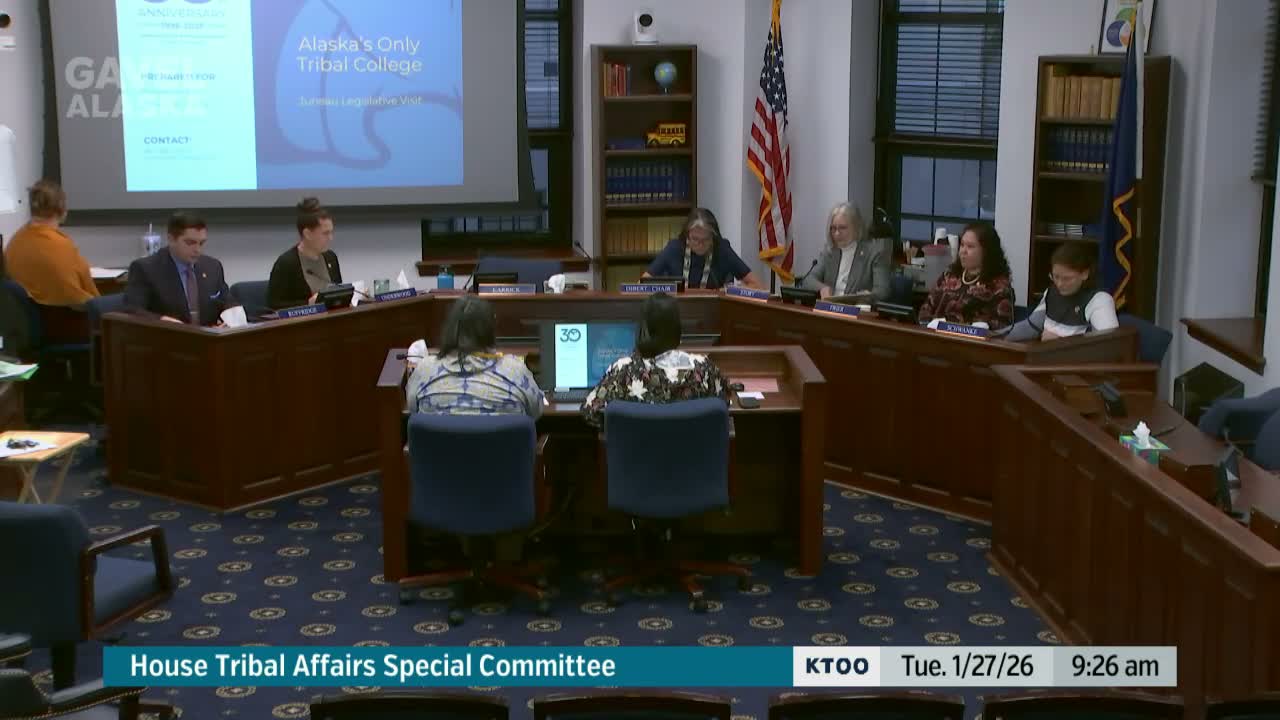
Juneau (House Tribal Affairs Committee) — Ilisagvik College President Justina Wilhelm told the House Tribal Affairs Committee on Jan. 27 that the college, Alaska's tribally controlled community college, is pursuing a new campus, expanding workforce training and monitoring federal funding changes that could affect tribal colleges.
"We are tribally chartered and we embed Inupiat culture, language and values into our programs," Wilhelm said. "We're working to grow a well-educated, trained workforce not only for the North Slope but for Alaska and beyond." She noted the college's 30th anniversary and said Ilisagvik is accredited by the Northwest Commission on Colleges and Universities.
Why it matters: Wilhelm described a funding mix that combines local borough support, state TVEP (technical and vocational education) funding and federal and private grants. She said the college receives a small share of TVEP funding and urged the legislature to consider increasing support for tribal colleges that serve remote and Indigenous communities.
Key details: Wilhelm said Ilisagvik received about two-thirds of local funding from the North Slope Borough and additional funds from state, federal and private donors. She told legislators Ilisagvik typically enrolls around 1,1001,200 students in stronger years and had nearly 1,000 last year, and that many workforce trainings (including heavy equipment and CDL) serve critical local needs. The college reported plans to purchase 15 acres for a centrally located campus and outlined a three-phase build plan; some congressional funds have been identified but the project needs additional capital.
State funding specifics and partnerships: Wilhelm said Ilisagvik receives TVEP funds (the college reported a 3 percent TVEP share in the presentation while the University of Alaska receives a much larger share) and has memoranda of agreement with University of Alaska campuses and regional school districts for dual credit and program pathways. She described partnerships for allied health, nursing pathways and a heavy-equipment training track run with Northern Industrial Training.
"We only receive a small percent of TVEP but we believe our role in statewide workforce development justifies a larger share," Wilhelm said.
Infrastructure and access: Ilisagvik described recurring internet and bandwidth issues in the North Slope, noted the college provides loaner laptops and internet stipends for students, and said it needs capital for a new campus, heavy-equipment vehicles for training and staffing to expand programs.
Next steps: Wilhelm asked the committee to consider how state and federal funding mechanisms can better support tribally controlled colleges and to sustain workforce programming that keeps students in their home communities.