
House Finance hears HB 283 supplemental; industry urges quick approval of DOT match to secure $700 million in federal work
Get AI-powered insights, summaries, and transcripts
Subscribe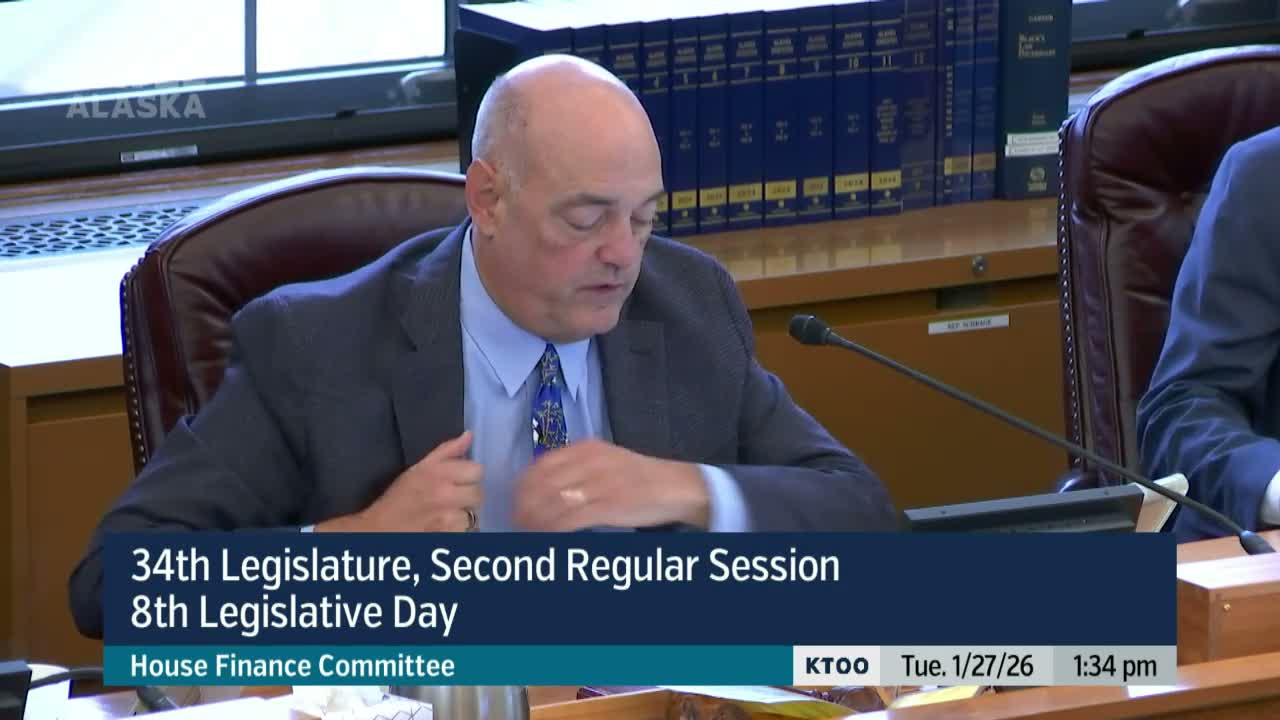
Summary
At a Jan. 26 House Finance hearing on House Bill 283, staff outlined a $3.82 billion supplemental package that adds a $36.4 million Medicaid match, refills the Higher Education Investment Fund, and includes roughly $69.7 million in state match for federal transportation grants; contractors and trade groups told lawmakers that early approval is needed to preserve projects and jobs.
Ken Alper, staff to the House Finance Committee, introduced House Bill 283 on Jan. 26 as a committee‑sponsored supplemental capturing mostly governor‑requested items pulled from the operating and capital budgets to fast‑track mid‑year needs. He told the committee the bill would address a set of deficits and reappropriations and put a $3.82 billion cap on the supplemental package.
The bill packages several priorities into one fast‑track measure: sections 1–3 add a Medicaid state‑match shortfall the Department of Health reported as $36,400,000; later sections include a roughly $69.7 million state match aimed at unlocking as much as $700 million in federal highway and construction funding, a disaster relief capitalization of $40,000,000, a $55,000,000 line for fire suppression to reimburse amounts already spent under disaster declarations, and a transfer to refill the Higher Education Investment Fund (the refill is slightly less than $129,000,000). Alper said using the Constitutional Budget Reserve to fund the package would require a three‑quarters vote.
The construction and resource sectors pressed for swift action. Alicia Kressel, executive director of the Associated General Contractors of Alaska, urged early approval to avoid compressing the federally required project‑development timeline, saying, “DOT does have the ability to carry its current reduced construction program through July 2026,” but added that late match funding “introduc[es] unnecessary risk and disruption to this process.” Kressel called the timing “unprecedented.”
Rebecca Logan, CEO of the Alaska Support Industry Alliance, told the committee that meeting the state match is a high‑return investment: approving the match now “unlocks roughly nine times that amount in federal investment” and helps preserve supplier and contractor capacity across the state. Scott Viera of Northstar Terminal said the $70 million match would support dozens of major projects and thousands of jobs this summer and warned that delays could force contractors to shrink workforces and move employees out of state.
Legislative staff and agency fiscal analysts answered detailed member questions about line‑item accounting. Alexi Painter of the Legislative Finance Division clarified that a $459,000 line shown in the capital section represents unrestricted general fund receipts for standalone statewide programs and is not part of the DOT federal match. Committee members pressed staff on the provenance of prior reappropriations, veto impacts, and whether items in HB 283 duplicate or would be removed from other budget vehicles if the bill passes.
After invited testimony from industry and LFD briefing, Chair Josephson announced the committee will hold House Bill 283 for further work and to receive the governor’s day‑15 supplemental submissions expected early next week. No final vote was taken.
Next steps: the committee is holding the bill pending the governor’s supplement and further legislative review of the administration’s supplemental requests and the Legislative Finance Division’s analyses.