
DOT defends brine use, cites tradeoffs as Kenai reduces pretreatment
Get AI-powered insights, summaries, and transcripts
Sign Up Free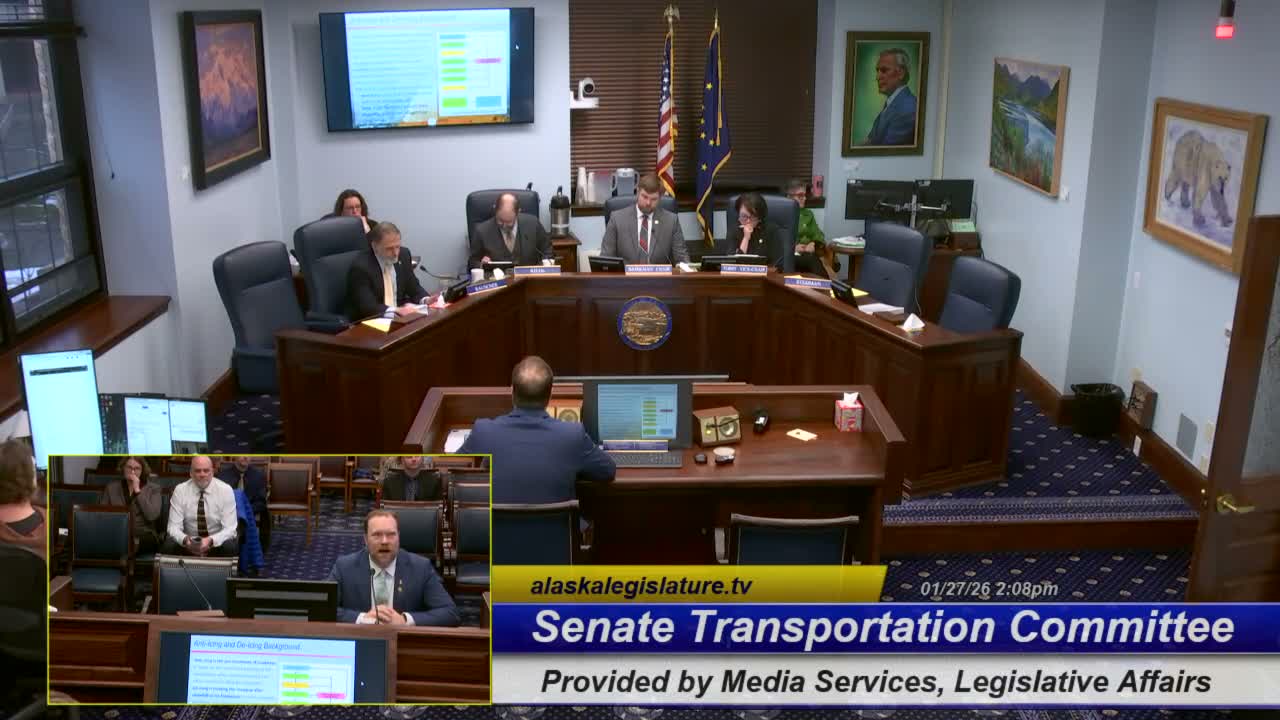
Summary
DOT officials told the Senate Transportation Committee they reduced brine use on the Kenai Peninsula after public input but continue brine on higher‑speed roads; alternatives such as beet juice and urea have cost, aesthetic and environmental tradeoffs, DOT said. The department cited a statewide brine literature review informing mitigation steps.
At a Jan. 27 Senate Transportation Committee briefing, the Alaska Department of Transportation and Public Facilities defended its use of liquid brine for pretreating roads while describing limits and tradeoffs that led to reduced use on the Kenai Peninsula.
Andy Mills, DOT legislative liaison, explained the difference between anti‑icing (pretreatment) and de‑icing and said the department has explored alternatives. "Beet juice was 1, which is quite quite fascinating, natural product," he said, but added it is "sticky," darker in color and more expensive, producing public reactions. He also noted urea can be effective but has odor and vegetation‑growth side effects.
Jason Sakhlaskas, Northern Region maintenance and operations chief, said sodium chloride is typically the most used product and that calcium or magnesium chloride can be more corrosive and are reserved for targeted applications. DOT has been using inhibitors in brine to reduce corrosion concerns and has conducted a statewide literature review on brine impacts that credited Laura Fay for technical input.
Committee members pressed DOT on Kenai Peninsula policy. Mills said the department responded to local resolutions and public comment by reducing brine in some areas while maintaining it on higher‑speed highways (Sterling, Seward, Kenai Spur) where safety risks are greater. DOT staff emphasized tradeoffs: increased sand use can clog storm drains and cause vehicle damage, while eliminating brine would require more equipment and passes to achieve the same clearance standards.
DOT told senators it will continue outreach, maintain monitoring and follow up with the committee on mitigation measures and the literature review findings.