
Panel hears data showing growth in Alaska’s 65+ workforce and post‑COVID rebound in teen employment
Get AI-powered insights, summaries, and transcripts
Subscribe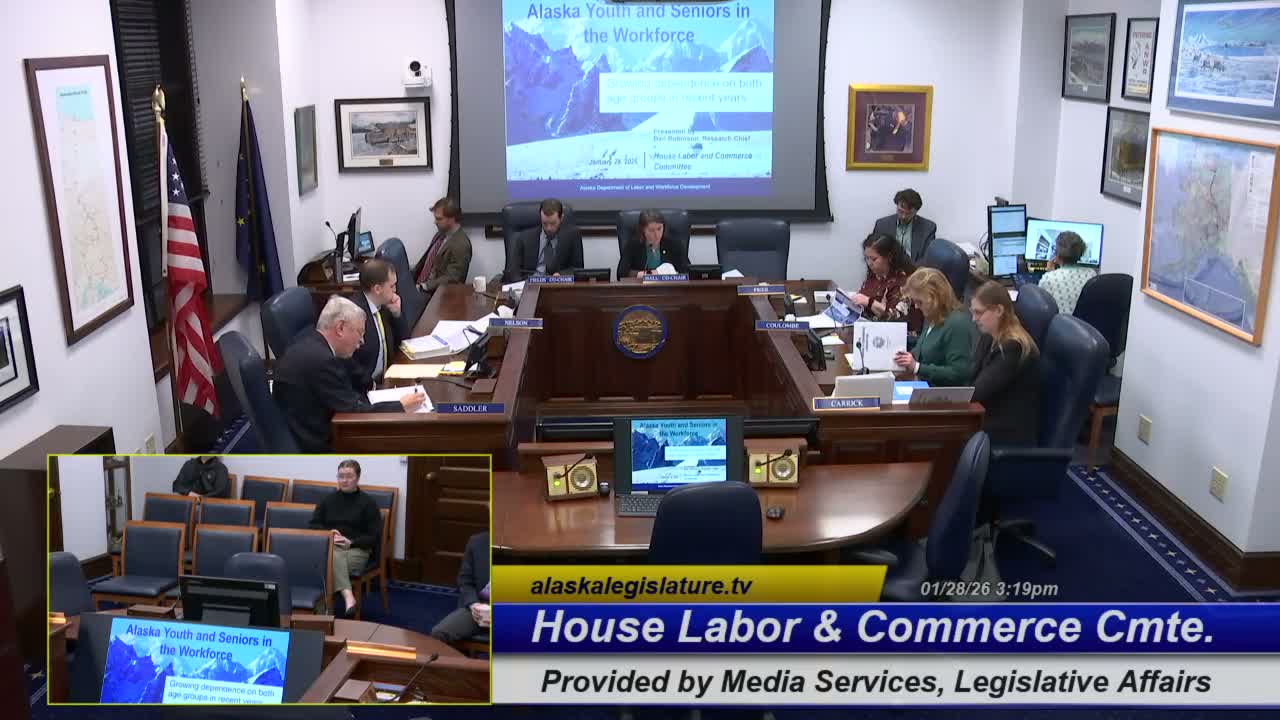
Summary
The House Labor and Commerce Committee heard state labor researchers and advocates describe a sharp rise in workers aged 65 and older since 2003, a post‑COVID increase in teen employment, and sector trends that concentrate teens in hospitality and seniors in teaching and health care.
The Alaska House Labor and Commerce Committee heard on Jan. 28 that workers aged 65 and older are the fastest‑growing segment of the state's labor force while teen employment (ages 14–17) rose after the COVID‑19 downturn.
Dan Robinson, research chief at the Alaska Department of Labor and Workforce Development, told the committee his office reviewed two October 2025 Alaska Economic Trends articles showing that the share of the workforce made up by 14‑ to 17‑year‑olds fell through the 2000s and the Great Recession but climbed after COVID. "This is the percentage of the workforce that are teens," Robinson said, and he cautioned the committee that that is a different measure than the share of teens who hold jobs.
Robinson also presented wage data for teen workers, saying average quarterly wages rose during COVID to about $2,188; he noted that, if annualized for four quarters, that amounts to roughly $8,000 and that most teen work is low paid. "Most of these workers are, as you'd expect, in hotels, restaurants, retail," Robinson said, adding those industries account for about half of teen employment.
On seniors, Robinson said the number of workers 65 and older has grown dramatically since 2003, rising roughly 350% from around 5,000 to pushing 20,000. He attributed much of that change to baby‑boomer demographics and said older workers are concentrated in occupations such as school teaching and health care. "It drops off quite noticeably when you get into the seventies," Robinson said when asked about participation by older age bands.
Committee members pressed Robinson on regional patterns and counting methods. He said regional counts reflect people who work in a region rather than where they live, and he pointed to Southeast as a place with a high share of 65+ workers; he said North Slope shows comparatively low shares of both older residents and older workers.
Robinson also placed the cohorts in broader labor‑market context: combined, youth and seniors make up about 10% of the resident workforce, he said, while the working‑age population shrank by roughly 30,000–33,000 between 2015 and 2025. Robinson told members the department will release a 2024 report showing 22.9% of people who worked in Alaska in 2024 were nonresidents.
Advocates and educators told the committee such trends have policy implications. Marj Stoneking, advocacy director for AARP Alaska, said older workers bring experience and reliability but face age discrimination in hiring. "Older workers should be valued members of our workforce," she said, citing national AARP and U.S. Bureau of Labor Statistics findings about baby‑boomer plans to work past traditional retirement ages.
Sean Schubert, workforce development coordinator at King Tech High School, described career‑technical education partnerships and internship models that let students earn credit while gaining paid or unpaid work experience. He urged state funding to support instructors, vehicles and insurance needed for programs such as school‑sponsored driver training and cited industry partnerships — including with the Alaska Hospitality Foundation and scholarship arrangements — to place high‑school students in hospitality and technical roles.
Committee members sought follow‑up: Representative Clum asked whether the department can provide unemployment‑insurance claim counts by age; Robinson said staff can provide claims by age to the committee. Several members asked about the role of seniors and youth in public‑sector hiring and about the data sources and methods used to calculate age by matching to the Permanent Fund Dividend application file.
The hearing closed with chair remarks and no formal votes on policy. The committee asked staff for additional data and information that could inform future bills or oversight work.