Get Full Government Meeting Transcripts, Videos, & Alerts Forever!
Get email alerts on the Investigative Process topic
No spam. Unsubscribe anytime.
Kent County ACC praises clearer investigation file format, urges consistent policy language
Summary
At its Sept. 4 meeting the Kent County Administrative Charging Committee approved minutes, reported no new cases, and praised a standardized investigation file naming convention while urging police agencies to adopt clearer, consistent policy language; a training on Oct. 23 was also discussed.
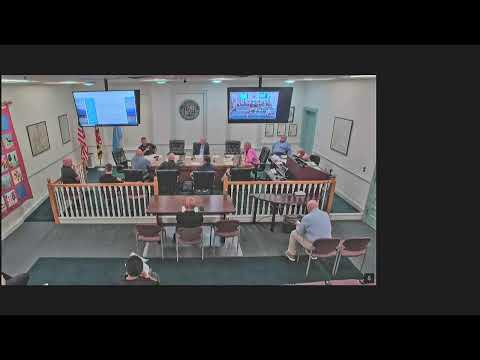
KENT COUNTY — The Kent County Administrative Charging Committee met Sept. 4 and approved last month’s minutes before turning its attention to process improvements for investigations and agency policy language.
“Once we all agree to it, we will forward it to Frank and Pete,” Speaker 1 said as the committee discussed formalizing procedures that grew out of a recent PAB meeting and a ‘Coffee with a Cop’ event. The committee recorded a voice vote approving the minutes after Speaker 4 moved to accept them.
The meeting’s substantive discussion centered on a change to how investigation files are organized. “The naming convention of each of the files… like 01 John Doe,” Speaker 2 said, calling the format “especially helpful” for reviewing files electronically and in paper. Committee members said the structure reduced time spent finding evidence and improved deliberations.
Speaker 2 also told the committee the four investigations the panel has reviewed so far have been “very thorough,” and that in those cases the ACC had not needed to request additional material. Speaker 6 and other attendees thanked investigators for improving the presentation and pledged to continue refining file ordering and headings so evidence such as body camera footage and interviews are easier to locate.
Members then raised a broader concern about consistency in police policy manuals. “If profanity in uniform in dealing with incidents is an issue, then the policy needs to be very clear that profanity is not tolerated or is only used in appropriate situations where it may actually be used to deescalate,” Speaker 2 said. Other members cautioned that language such as “excessive” or “courteous and professional” is often interpretive. Speaker 6 said agencies regularly revise policies and noted the difficulty of writing language that balances officer discretion with accountability.
The committee also discussed upcoming training and accreditation matters. Speaker 1 reminded members of a one-day training scheduled for Oct. 23; Speaker 6 noted a CALEA assessment was expected “on the eighth.” Some members said they had not received registration confirmations and staff agreed to confirm sign-ups.
No new cases were placed before the committee for deliberation at the Sept. 4 meeting. The session concluded after members thanked staff for follow-up work — Speaker 7 singled out “Frank” for timely responses to queries — and Speaker 2 moved to adjourn, a motion Speaker 1 seconded and the committee approved by voice vote.
The committee said it will circulate the proposed rules and procedures for review and, once finalized, forward them to county staff for deconfliction with county policy.