Lifetime Citizen Portal Access — AI Briefings, Alerts & Unlimited Follows
Senate receives multiple House bills and advances a broad slate of Senate bills to committees
Loading...
Summary
Clerk announced numerous House messages referring bills (industrial access roads, business ready sites, higher education grants, Medicaid provider changes, protections for foster children) to relevant Senate committees; the Senate also introduced a batch of Senate bills (600–634) and listed many bills on first and second reading.
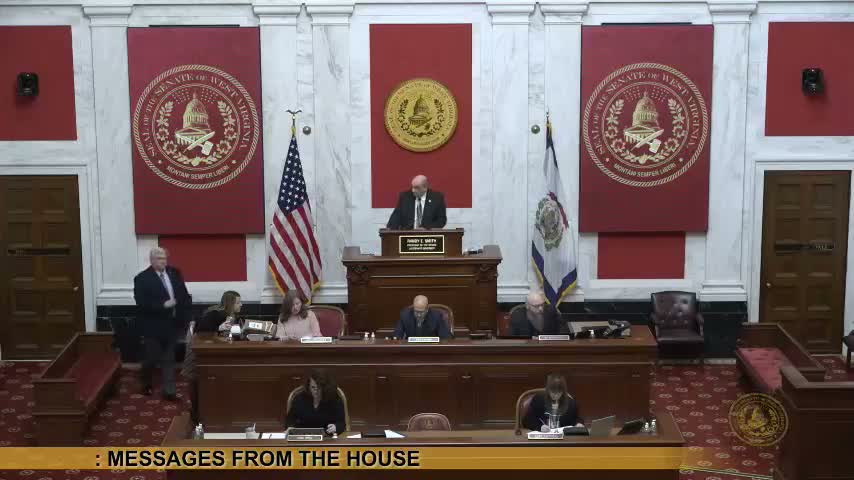
On Jan. 27 the West Virginia Senate clerk relayed multiple communications from the House, sending a set of House bills to standing committees for consideration.
Notable House messages included committee substitute for House Bill 4007 (relating to industrial access roads), House Bill 4008 (business ready sites program), House Bill 4081 (creating a higher education health and aid grant), committee substitute for House Bill 4335 (Medicaid providers), and House Bill 4352 (prohibiting cameras and recording devices in foster children’s bedrooms and bathrooms). The clerk stated each bill would be referred to the appropriate Senate committee (economic development, education, finance, health and human resources, and judiciary as applicable).
Senator from Lewis requested unanimous consent to introduce Senate Bill 600 through Senate Bill 634; the chair ordered them introduced by title and referred them to committees via the chamber automation system. The clerk also read multiple Senate bills on first and second reading across subject areas, including proposals related to home incarceration supervisor offenses (SB55), Department of Homeland Security rulemaking (SB281), DOT rulemaking (SB309), crimes against public justice (SB4), surveillance restrictions (SB84), school material availability (SB388), flood resiliency disbursements (SB390), personal income tax definitions and gaming/gambling loss provisions (SB400), municipal fire marshals (SB443), and eligibility for participation in Learn and Earn programs (SB445).
Most items were advanced to committees or ordered engrossed in advance for third reading where applicable; no final passage of the listed bills was recorded on the floor that day.