
Committee Backs Workforce Readiness and Opportunity Act Expanding Microcredentials, Apprenticeship Credits and Portable Benefits
Get AI-powered insights, summaries, and transcripts
Subscribe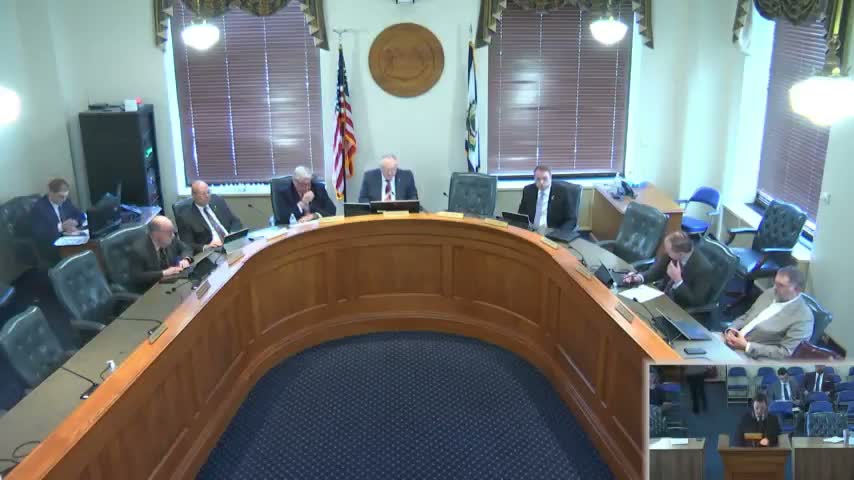
Summary
The committee agreed to the committee substitute for Senate Bill 402, a governor’s bill that would create a West Virginia microcredential program within HEPC, broaden apprenticeship tax credits to all U.S. Department of Labor–registered apprenticeships, authorize voluntary portable benefits for independent contractors, and streamline military licensure by eliminating a proficiency exam for qualifying applicants. The substitute was reported to the full Senate and referred to Finance first.
The Workforce Committee agreed to a committee substitute for Senate Bill 402, titled the Workforce Readiness and Opportunity Act, a governor’s bill that includes four substantive changes to state workforce policy. Counsel explained the measure would: place a new West Virginia microcredential program within the Higher Education Policy Commission and direct the HEPC chancellor to work with education providers and employers to design and validate microcredentials; extend the state apprenticeship training tax credit to apply to wages paid to apprentices in any apprenticeship registered with the U.S. Department of Labor rather than limiting the credit to construction trades; authorize voluntary portable benefits plans for independent contractors to be administered by third-party providers with hiring-entity contributions allowed by agreement and certain tax deductions for contributions and benefits; and modify an existing 2023 framework to require chapter 30 professional boards (with statutorily excluded boards for law and medicine) to issue licenses to qualified military applicants without requiring a proficiency examination, subject to honorable discharge and no disqualifying criminal background.
Counsel noted the committee substitute locates the microcredential program in HEPC (rather than Commerce) to build on existing initiatives and said the governor’s office recommended the substitute; a representative from the governor’s office was present. Senator from Harrison asked whether the apprenticeship expansion truly applies to all registered apprenticeship programs and whether fiscal notes exist; counsel confirmed the expansion applies to any apprenticeship registered with the U.S. Department of Labor and said a fiscal note had been requested but was not yet available. Senator from Harrison praised the apprenticeship portion as a way to keep young people in West Virginia through paid real-world training. The committee agreed to the committee substitute by voice vote, and the vice chair moved that it be reported to the full Senate with the recommendation to pass, first sent to the Committee on Finance under double-reference; the motion carried.