
Committee Adds 30‑Day Reimbursement Rule and Sends Minimum Clothing Allowance Bill to Full Senate
Get AI-powered insights, summaries, and transcripts
Subscribe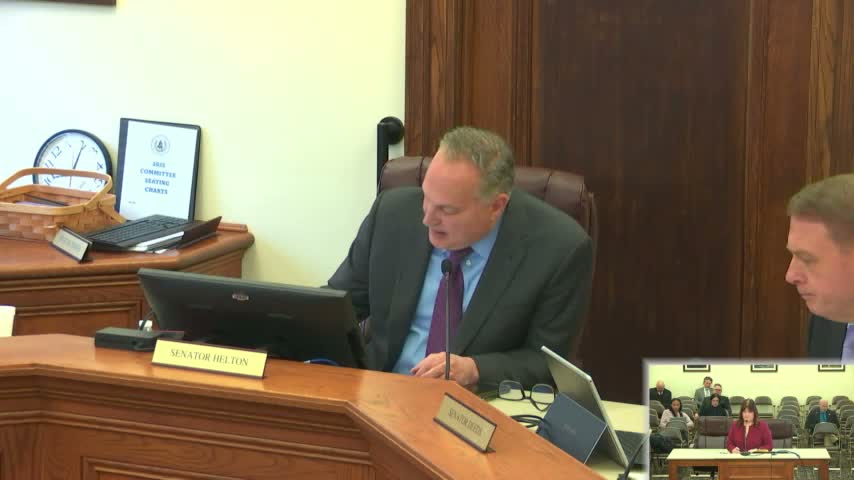
Summary
A committee approved a committee substitute for Senate Bill 546 setting a minimum initial clothing allowance of $375 and a supplemental allowance up to $175 for children entering foster care, established three payment methods (reloadable card, CPS purchasing card, reimbursement) and added an amendment requiring the department to pay reimbursements within 30 days of invoice receipt.
A Senate committee adopted an amendment and voted to report a committee substitute for Senate Bill 546 to the full Senate with the recommendation that it do pass, after a day‑of discussion on how to make initial clothing allowances and reimbursements work for foster and kinship placements.
Committee counsel described the bill’s core provisions: "The initial clothing allowance would be a minimum of $375, and a supplemental clothing allowance would be not to exceed a $175," counsel said. Counsel told members the bill sets out three payment methods: a reloadable instant card (preferred), a CPS worker using a purchasing card, or reimbursement to the placement provider (the least preferred method). Counsel said the Department of Human Services would adopt policy for card use, reloading and receipt reconciliation to allow an audit trail.
Members questioned whether the supplemental payment was recurring or tied to changes in circumstance; counsel said the supplemental is typically triggered by an unusual change in the child’s circumstances — for example rapid growth or pregnancy — and is not intended as a routine periodic payment. Counsel also said the initial assessment is intended to account for seasonal needs (warm and winter clothes) and that ongoing foster‑care maintenance payments are expected to cover future clothing purchases.
Senator from Jefferson pressed for a deadline on reimbursement after expressing concern that the department has not always prioritized prompt payment. He proposed — and the committee adopted — language requiring that departmental payment be made within 30 days of receipt of an invoice. Counsel told the committee, "I would assume that that would be a reasonable time frame to turn around once an invoice has been provided," and agreed to add the clause to both kinship and foster reimbursement tracks.
Sponsors and committee members said the bill grew from prior child‑welfare committee work, including problems with the paper voucher system that was accepted by only a single vendor (identified in committee discussion as Gabe’s), which made purchases and reimbursement difficult for families. Supporters said the instant card and reconciliation policies are intended to simplify purchases and reduce the administrative burden on foster and kinship caregivers.
After adopting the amendment and agreeing to the committee substitute, the committee voted by voice to report the measure to the full Senate with a second reference to the committee on finance.