
Inspector General warns of lingering pass‑through problems, SNAP error‑rate exposure
Get AI-powered insights, summaries, and transcripts
Subscribe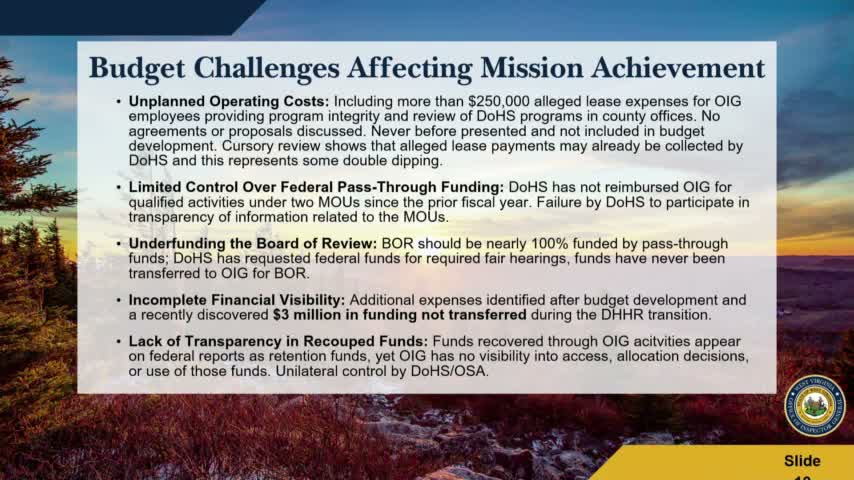
Summary
Inspector General Anne Earling described legacy funding and MOU gaps after the office’s statutory separation, identified about $3M in federal pass‑through funds not transferred since 2024, and warned the SNAP payment error rate (about 9%) could expose the state to federal penalties if not reduced below roughly 6%.
Inspector General Anne Earling told the Senate Finance Committee that the newly independent Office of Inspector General is functioning as a taxpayer watchdog but faces legacy issues that prevent full operational independence. Earling said that since the office separated administratively (pursuant to the Legislature’s intent in prior legislation) the agency has encountered unclear MOUs, shared‑administration charges, and reported a recent discovery of roughly $3,000,000 that had not been transferred to OIG since 2024.
Earling requested clearer statutory and administrative treatment to allow the office to manage federal pass‑through funds, retain interest on balances where appropriate and reduce operational friction with the Department of Human Services. She said the office seeks the authority to invest in data analytics and fraud‑prevention tools and noted early efficiency savings such as consolidated telecom contracts and vehicle replacements secured with one‑time funds.
On SNAP program oversight, Earling said the quality control unit calculates the payment error rate required by federal guidelines; she reported a historical error rate around 9% and warned that sustained rates above the federal threshold (near 6%) can trigger substantial federal financial consequences. Earling said the office is working with federal partners and offered operational steps — including earlier case validation and targeted audits — to reduce the error rate and lower risk to the state.
In response to senators, Earling said some federal administrative pass‑through funding and reimbursements remain subject to negotiation over MOU terms and that OIG staff have been working to reconcile accounting history and documentation with other agencies.