House panel hears bill to let Alaska Railroad sell downtown Whittier parcels to city
Loading...
Summary
Representative Kai Holland introduced HB 216 to authorize the Alaska Railroad to convey five parcels to the City of Whittier; invited testimony from the city manager and the railroad said the sale would clarify site control, support municipal taxing and improve access to federal funding while the railroad board will still need to find the parcels nonoperational and approve sales.
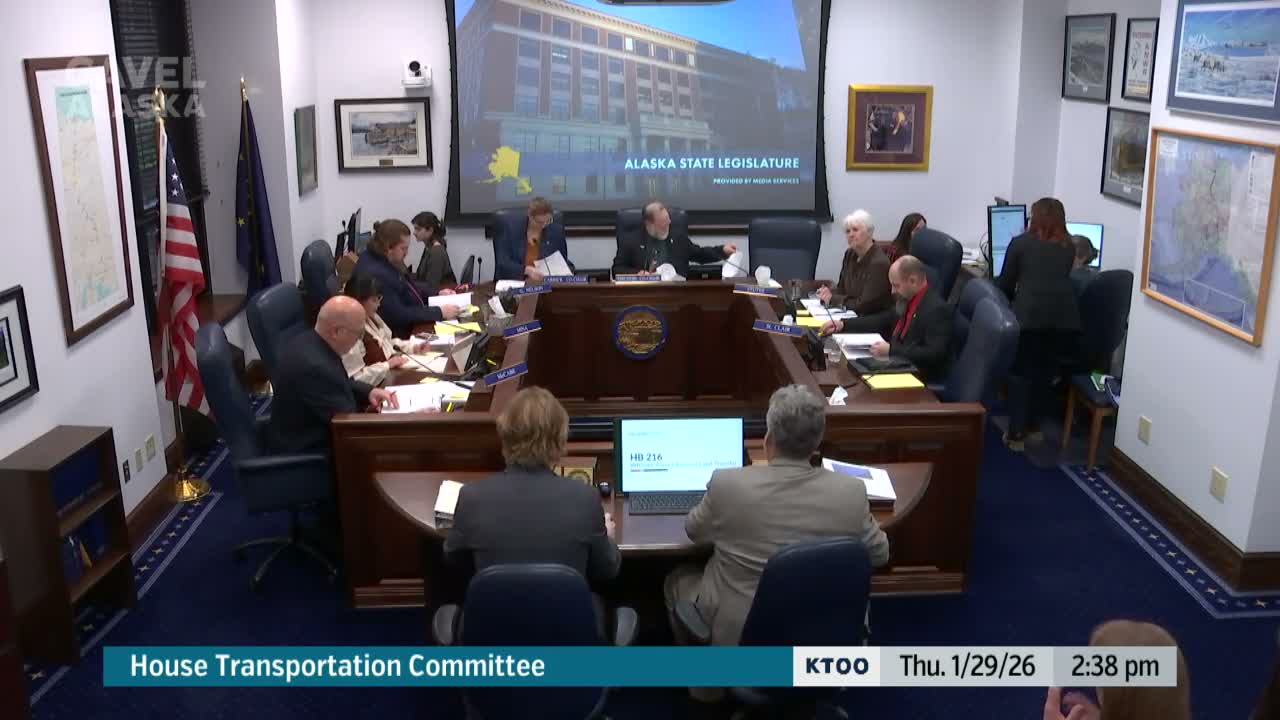
The House Transportation Committee held the first hearing on House Bill 216 on Feb. 29, a bill that would authorize the Alaska Railroad to convey specified parcels in Whittier to the City of Whittier under Title 42's railroad‑land transfer process.
Rep. Kai Holland (House District 9), the bill sponsor, said the transfer responds to a long negotiation intended to allow Whittier to exercise site control for municipal infrastructure and economic development. "The transfer at this point is not completed until both the city and the railroad reach their final purchase agreement, but this is a necessary step for them to be able to complete that process," Holland said.
Aidan Nickel, staff for Representative Holland, explained the bill text authorizes five parcels identified in the sectional analysis but noted the parties currently have a negotiated deal covering three downtown parcels; the bill includes all five so future conveyances could proceed without returning to the Legislature.
Jackie Wilde, Whittier city manager, gave invited testimony describing the governance problem the bill seeks to fix: decades‑old master‑lease arrangements left the city responsible for planning and infrastructure on land it did not own, limiting the city's ability to secure federal funds and a taxable base. Wilde said Whittier has 273 year‑round residents and that the bill "provides the authority to carefully and responsibly" align ownership and responsibility.
Megan Clemens, external affairs director for the Alaska Railroad, testified the railroad supports HB 216 and that the railroad board must still find the parcels are not needed for railroad purposes and approve sales at fair market value as required by statute. Clemens said the railroad has offered to sell parcels 1–3 (downtown) and recently received a conditional letter of intent from the city; she said the board will consider those areas at its next meeting.
Committee members asked whether language allowing later surveying/planning and flexible parcel boundaries is standard in these transfers; members indicated that the Nenana transfer had similar features and committee staff confirmed such legislative language is typical when final boundaries depend on future surveying.
Procedurally, co‑chair Ayscheid placed an amendment deadline for the bill on the record (stated as "next Monday, February 2 at 5PM" in the hearing transcript) and announced the committee's next meeting. The railroad and city representatives said their ongoing negotiations and the railroad board review remain prerequisites to closing any sale.
What happens next: the committee accepted invited testimony, set an amendment deadline on the record, and will take formal legislative steps if staff and sponsors advance the bill. The railroad said it expects to bring a board resolution for parcels 1–3 at its next board meeting.