Get AI Briefings, Transcripts & Alerts on Local & National Government Meetings — Forever.
Alaska bill would give utilities limited liability if approved wildfire mitigation plans are followed
Loading...
Summary
Rep. Kai Holland introduced HB252, which would require utilities to file DNR‑approved wildfire mitigation plans and creates a presumption of limited liability for wildfire damage if plans are followed; the bill includes exceptions for gross negligence and utility‑caused vegetation contact and drew fiscal and insurance‑industry concerns.
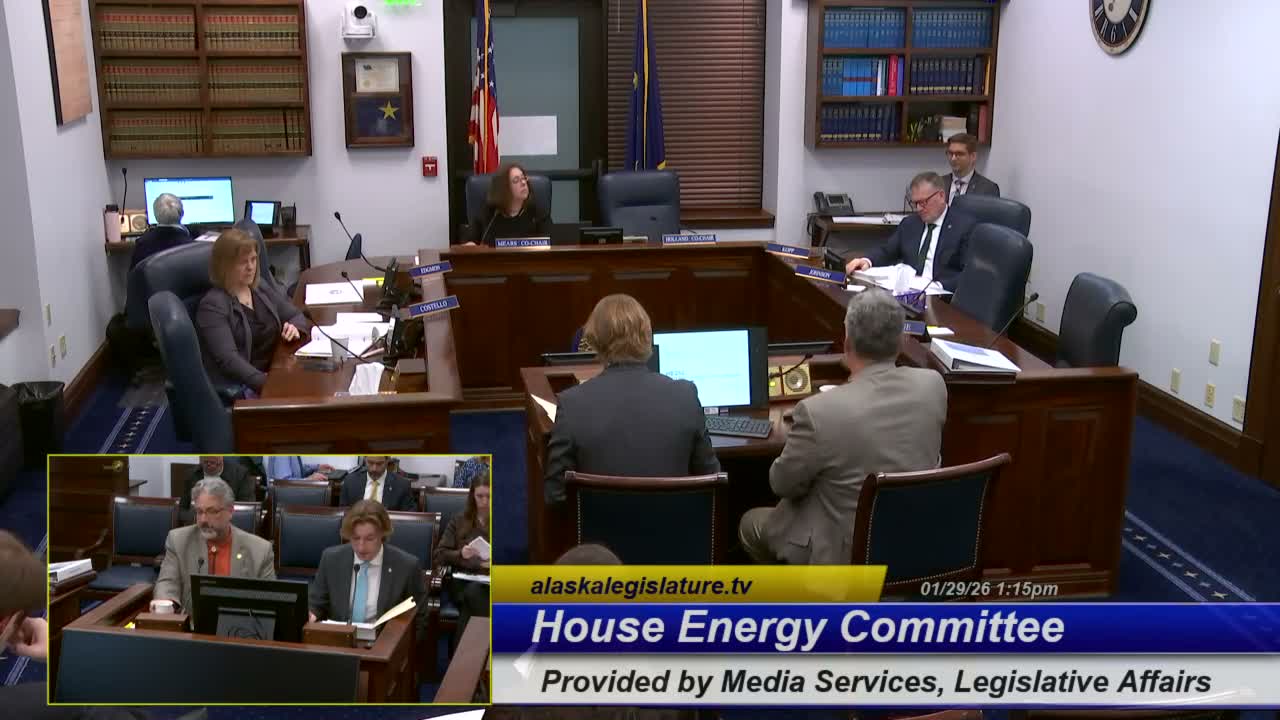
Representative Kai Holland introduced House Bill 252 to the House Energy Committee on Jan. 29, 2026, proposing that electric utilities adopt written wildfire mitigation plans reviewed by the Department of Natural Resources' Division of Forestry and, if those plans are followed, receive limited liability protection for wildfire damages.
The bill’s chief aim, Holland said, is to reduce the risk of large urban‑perimeter wildfires by formalizing practices utilities already use and by coordinating utility plans with community wildfire protection plans. “We wanted to have more of the subject matter expertise that the division brings,” Holland said when describing why the Division of Forestry should review plans.
Staff to Rep. Holland, Aidan Nichols, said the core elements would require utilities to assess wildfire risk on their property and adjacent lands; maintain and upgrade electrical infrastructure; define procedures for vegetation management, detection, emergency notification and access; and balance consumer impacts of possible shutoffs against wildfire risk. Nichols summarized a central legal change: “The key part of section 1 creates a presumption that a utility is not liable for causing or failing to prevent a wildfire, so long as it has followed a wildfire mitigation plan,” but he added that the protection would not be absolute.
The bill lists explicit exceptions to the liability presumption: it would not apply where a utility acts with gross negligence, when vegetation within the utility’s right‑of‑way causes the fire, when the utility is working outside its property or right‑of‑way without authorization, or when utility activity causes vegetation to contact a power line. The measure also would require utilities to notify adjacent property owners when their assessment shows high wildfire risk and would allow property owners to enter agreements for the utility to manage vegetation on their land; those owners would not be held liable for damages from utility work on their property.
Nichols disclosed two fiscal notes: a $0 note from the Department of Commerce, Community, and Economic Development and a $674,000 fiscal note from the Department of Natural Resources for staff and travel to support plan review and coordination. Committee members pressed whether that DNR cost could be narrowed by limiting the division’s role.
Members raised concerns from insurers and utilities. Nichols said the insurance industry objected to overly broad liability shields that could limit recovery. Committee members also asked how the bill would address private trees off the right‑of‑way that pose hazards; Nichols said the bill creates notice and voluntary agreement pathways but does not compel private owners to remove healthy trees.
Several members urged inviting utilities and the Alaska Power Association for a future hearing to explain how prior wildfire settlements were funded and whether ratepayers ultimately bore costs. Norm McDonald, deputy director for the Division of Forestry and Fire Protection, said the state did not pursue cost recovery after the McKinley fire; insurance and other settlements handled costs.
The committee set HB252 aside for invited testimony at the next meeting on Feb. 3. Further technical and administrative details — including the division’s review criteria and how to limit the bill’s scope to reduce fiscal impact — were left to follow‑up sessions.
The committee will hear invited testimony on HB252 on Feb. 3; the bill remains pending review and possible revision.