Utqiagvik Inupiat Corporation tells Senate committee it can support Arctic security and training
Loading...
Summary
Pearl Brower, president and CEO of the Utqiagvik Inupiat Corporation, described UIC’s broad business footprint, UIC Science’s growing role in Arctic logistics and military training support, and local concerns about unannounced foreign vessels and the need for better maritime situational awareness and infrastructure investment.
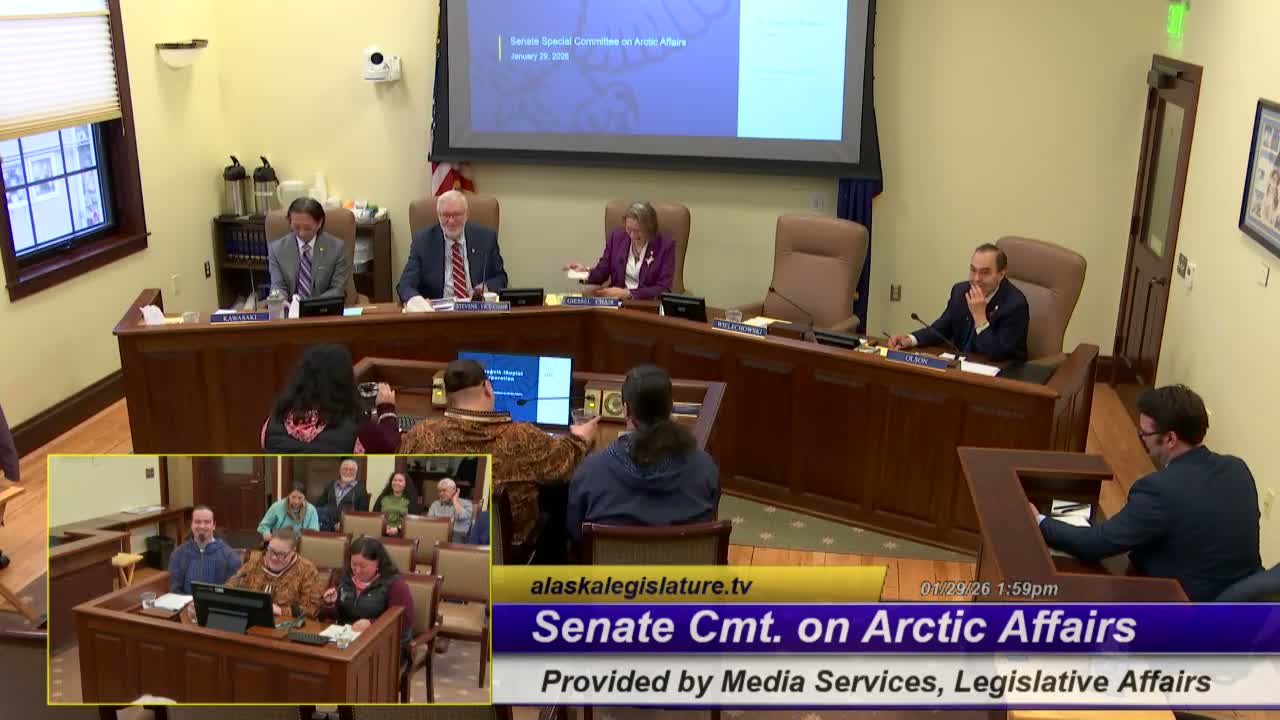
Pearl Brower, president and CEO of the Utqiagvik Inupiat Corporation (UIC), briefed the Senate Special Committee on Arctic Affairs on the corporation’s economic and security role in the region and urged stronger partnerships between local entities and federal agencies.
Brower said UIC serves more than 4,000 shareholders, employs about 4,400 people (roughly 620 in Alaska), operates more than 70 subsidiaries and reached approximately $1 billion in revenue in the prior year. She described UIC Science, a subsidiary that provides Arctic logistics and indigenous subject-matter experts for research and Department of Defense activities, and said demand for Arctic training and secure, culturally informed logistics is rising.
Examples Brower cited include support for Arctic Edge and ICEX exercises, housing and logistics for deployed military units, cultural immersion components that improve mission safety and survivability, and partnerships with the U.S. Coast Guard (observer rides aboard Healy) and the Ted Stevens Center for Security. She said UIC owns more than 220,000 acres and is exploring investments in training infrastructure and mock villages to support increased Arctic operations.
Brower flagged concerns about rising maritime traffic and unplanned arrivals off the North Slope coast: a foreign research vessel’s unscheduled approach this past summer prompted local questions about how quickly unplanned arrivals can be identified and what federal safeguards exist for coastal communities. She described trilateral coordination in Utqiagvik (tribal government, city, and village corporation) and requests for more federal engagement on maritime awareness and port/entry planning.
Why it matters: Brower framed UIC’s business and operational capacity as both an economic engine for shareholders and a potential partner for secure, culturally informed Arctic operations; she urged lawmakers to consider state and federal support to bolster local infrastructure and maritime situational awareness.
The committee discussed possible resolutions and follow-up with Brower and other presenters; senators asked about 8(a) contracting and possible legislative support, and Brower offered to connect the committee with Native contracting associations and UIC partners for detailed input.