Get Full Government Meeting Transcripts, Videos, & Alerts Forever!
House committee advances prompt-payment bill after failing to exempt nonprofits
Summary
The Alaska House State Affairs Committee moved House Bill 133 out of committee (4–3) after failing to adopt an amendment that would have exempted nonprofits from automatic prompt-payment penalties; the committee added intent language suggesting Rural Health Transformation Fund dollars as a potential source for certain technology upgrades.
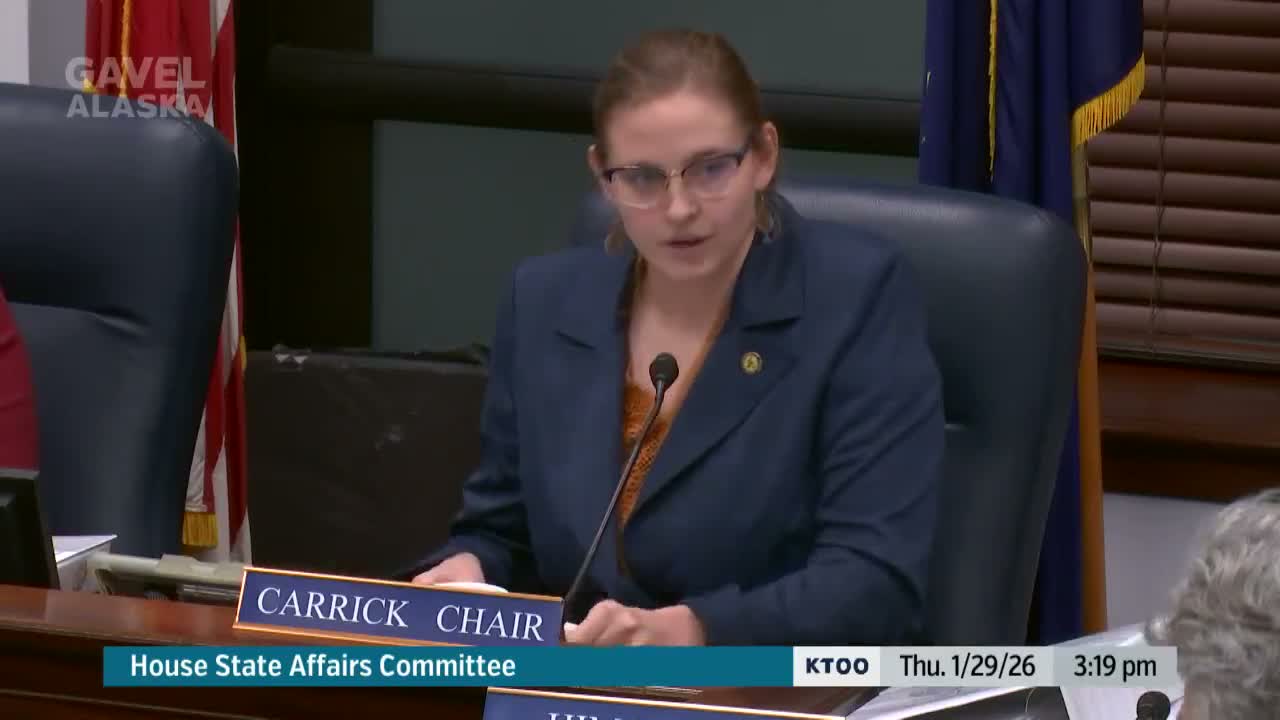
The House State Affairs Committee on Jan. 29 advanced House Bill 133, a measure to impose prompt-payment penalties for late state payments to vendors, municipalities and other entities, after a contentious debate over whether nonprofit organizations should be exempt.
Chair Kerrick moved and the committee adopted an amendment that added intent language identifying Rural Health Transformation Fund dollars as a potential source for technology upgrades cited in the Department of Health fiscal notes. Kerrick said the change was ‘‘intent language’’ only because the Alaska…
Already have an account? Log in
Subscribe to keep reading
Unlock the rest of this article — and every article on Citizen Portal.
- Unlimited articles
- AI-powered breakdowns of topics, speakers, decisions, and budgets
- Instant alerts when your location has a new meeting
- Follow topics and more locations
- 1,000 AI Insights / month, plus AI Chat