Committee considers HB258 to create statewide spay/neuter assistance program funded by voluntary plates and donations
Loading...
Summary
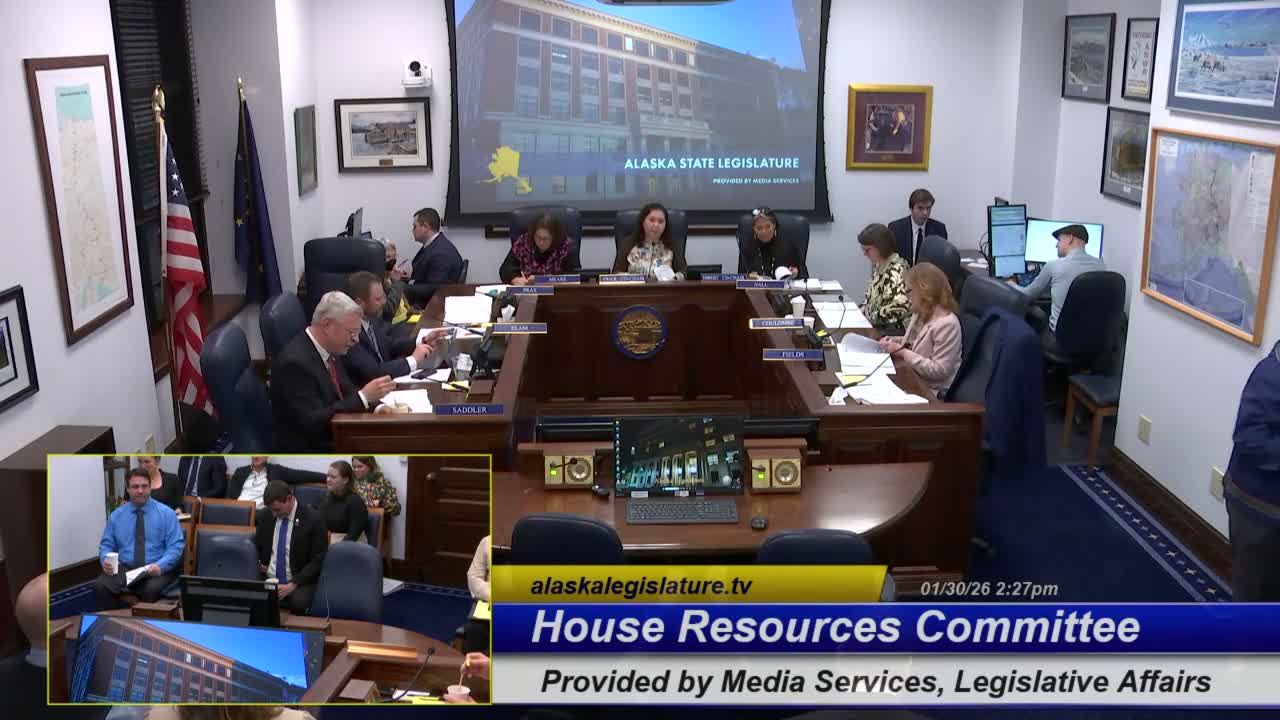
At an introductory hearing Jan. 30, 2026 the House Resources Committee heard HB258, which would establish a DEC‑administered statewide spay and neuter assistance program and fund, financed by special‑request license plates, Pick.Click.Give voluntary PFD contributions, donations and grants; witnesses described rural animal overpopulation issues and some members raised concerns about trap‑neuter‑release and Board of Game regulations.
House Bill 258, introduced as coming from Representative Stapp, received an introductory hearing Jan. 30, 2026 in the House Resources Committee. Representative Will Staff (who put himself on the record at the hearing) described the bill’s goal as a voluntary, statewide program to reduce uncontrolled dog and cat populations and the public‑health and shelter burdens they create.
Staff provided a sectional analysis describing statutory changes: creation of a "statewide spay and neuter assistance program" and fund, assignment of DEC rulemaking and annual reporting responsibilities, optional municipal ordinances authorizing capture/transport for spaying/neutering, creation of a special‑request vehicle registration plate with a $100 one‑time fee directing net proceeds to the fund, and participation in Pick.Click.Give so PFD contributors can make voluntary donations. The bill sets an effective date of Jan. 1, 2027.
Local testimony emphasized the scale of the problem. Nick Legenis, a Fairbanks North Star Borough Assembly member and president of Straw for Dogs, told the committee that rural and urban communities alike struggle with feral and free‑roaming animals, that volunteers and municipal shelters are overwhelmed, and that prevention through spay/neuter would reduce long‑term costs and public‑safety risks.
Agency officials flagged regulatory limitations. Ryan Scott, director of ADF&G’s Division of Wildlife Conservation, said that existing Board of Game regulations (cited in the hearing) broadly restrict capture and rerelease of animals, which is central to some trap‑neuter‑release (TNR) programs. Scott stated the board has received requests for TNR in the past and has not adopted it; the legislature could change those regulatory provisions if it wanted to authorize re‑release.
Committee members asked technical questions about the plate fee (one‑time vs. recurring), whether municipalities would be compelled to act (section 5 is permissive), and how DEC’s involvement would interact with existing nonprofit and municipal efforts. Proponents emphasized partnerships with veterinarians, nonprofits, tribes and municipalities; one witness suggested removing the rerelease language from the bill if it proved problematic.
The committee set an amendment deadline on HB258 for Friday, Feb. 6 at 11 a.m. and scheduled public testimony that same day. No final action was taken at the Jan. 30 hearing.