
Senators press who protects state value of North Slope resources; AOGCC says its mandate is technical recovery, not tax revenue
Get AI-powered insights, summaries, and transcripts
Sign Up Free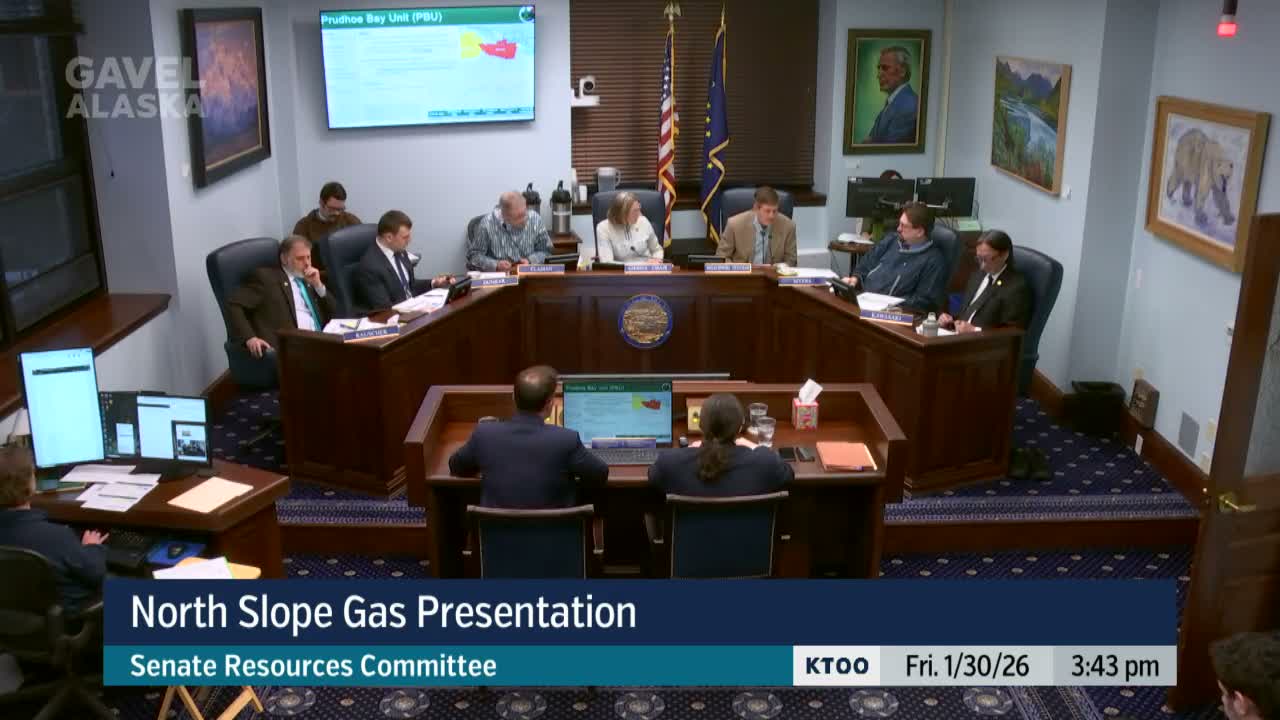
Summary
Committee members asked whether DNR or AOGCC is responsible for ensuring the state gets maximum fiscal benefit from gas sales. AOGCC said its statutory focus is on conserving the resource and maximizing ultimate recovery; DNR said it will model revenue impacts with the Department of Revenue.
Senators at the Jan. 30 Senate Resources Committee hearing questioned which institution has the final say on tradeoffs between oil recovery and gas sales and how the state will capture value from any Alaska LNG project.
Senator Willikowski pressed whether DNR or the Alaska Oil and Gas Conservation Commission carries responsibility for "making sure we get the maximum value for our resource." John Crother, DNR’s commissioner designee, said DNR’s role is to model and advocate for the state’s royalty value and to work with the Department of Revenue on tax implications, but he acknowledged that AOGCC has explicit regulatory authority over off‑take orders that constrain production rates.
AOGCC commissioner Jesse Chmielowski told senators the commission’s assessment in 2015 concluded that, on a barrels‑of‑oil‑equivalent basis, major gas sales could maximize ultimate recovery from Prudhoe Bay and that AOGCC does not factor taxes or commodity price into off‑take order decisions. "We're strictly looking at greatest ultimate recovery of the resource," Chmielowski said.
Why it matters: Legislators pointed to Article VIII, Section 2 of the Alaska Constitution and the state's budget shortfall, arguing revenue considerations should inform sequencing and offtake decisions. Senator Wilikowski said the committee needs public modeling on likely revenue flows before endorsing project steps that could reduce oil output and net state receipts.
What agencies said: Crother said the department can present revenue and recovery scenarios using assumptions about production volumes and prices; he declined to specify an interpretive legal position on a 2018 settlement agreement for Point Thompson but said DNR will pursue negotiation or enforcement to protect state interests as appropriate.
Next steps: The committee requested DNR and the Department of Revenue cooperate on modeling that quantifies how different offtake scenarios would affect royalties and state tax receipts; AOGCC representatives clarified that operators may apply to update off‑take orders and that the commission would consider such applications under its established procedures.