Get Full Government Meeting Transcripts, Videos, & Alerts Forever!
Get email alerts on the Candidate Profile topic
No spam. Unsubscribe anytime.
Roosevelt Mayor JR Byrd outlines run for U.S. House, emphasizing transparency and enforcing existing immigration laws
Summary
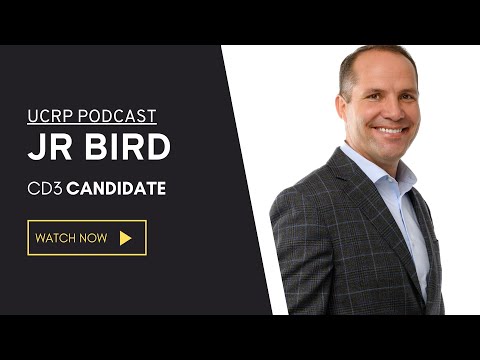
JR Byrd, mayor of Roosevelt and a candidate for Utahs 3rd Congressional District, told the Utah County Republican Party podcast hes running to restore government transparency, hold the executive branch to existing immigration laws and prioritize energy and budget concerns.
JR Byrd, mayor of Roosevelt and a candidate for Utahs 3rd Congressional District, said on the Utah County Republican Party podcast that he entered the race to address what he described as a lack of transparency and special-interest influence in government.
"We have $34,000,000,000,000 debt," Byrd said, listing the federal deficit as one of the issues that motivated his run. He cited energy policy, what he called a chaotic border and the centralization of executive power as other key concerns.
Byrd told host Charles Max Wood, the party vice chair, that his political career began after a college American history course and encouragement from his church led him to run for local office. As mayor and a council member in Roosevelt, he said, he pushed for reforms he described as rooting out corruption, restoring transparency and establishing term limits.
On immigration, Byrd argued existing laws would curb illegal crossings if the executive branch enforced them. "We have to put pressure on the executive branch to follow the laws that Congress has passed," he said, invoking Article II, Section 3 of the U.S. Constitution to say the president has a duty to execute laws on the books.
Byrd said he is pursuing a dual-path campaign: participating in the caucus process while also collecting signatures to secure a place on the primary ballot. He reported that his wife had collected "more than 800 signatures," said it takes 7,000 signatures to get on the ballot and noted there are about 1,000 delegates for the primary; he estimated, in his view, that the outreach required connects candidates with at least 8,000 people.
Asked about cultural issues, Byrd described the "culture war" as deliberately polarizing and said he wants to focus on shared priorities. He named Ronald Reagan and founding figures such as Thomas Jefferson and George Washington among those he admires and cited works by Robert Woodson, Frd3dric Bastiat, Ezra Taft Benson and Thomas Paine as influential to his views on government's role.
Byrd gave campaign contact information for listeners: birdforcongress.com and social accounts at BirdForCongress, and provided a personal cell phone number for questions. He said he is running because he believes voters need officials who keep promises and that he cannot stand aside while the issues he listed persist.
The interview was conducted on the Utah County Republican Party podcast. Byrd did not announce any formal endorsements or legislative proposals during the episode; he framed his priorities as holding government accountable and enforcing existing laws.