Get Full Government Meeting Transcripts, Videos, & Alerts Forever!
Get email alerts on the School District Split topic
No spam. Unsubscribe anytime.
Supporters say splitting Alpine School District would boost local control, could ease bond passage
Summary
Proponents argue Propositions 11 and 14 would create smaller, locally focused school districts (central and west), improve representation, preserve programs for students and teachers, and enable smaller bonds timed to drop-off of existing debt; opponents warn of transition risks. Podcast guests laid out the finances, timeline and protections.
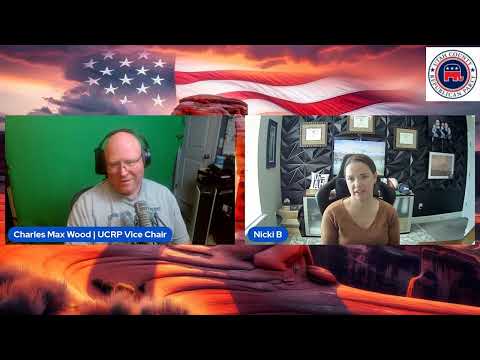
Charles Max Wood, vice chair of the Utah County Republican Party and host of the party podcast, and Nikki Brammer, a volunteer leader in Utah County GOP who served as chair of the state Republican convention and on the county steering committee for education, discussed Propositions 11 and 14 and what a split of Alpine School District would mean if voters approve it.
Brammer summarized the ballot questions: Prop 11 would create a new district from the Alpine School District covering Lehi, Highland, American Fork, Alpine, Cedar Hills and the portion of Draper in Utah County; Prop 14 would ask a similar question for Eagle Mountain, Saratoga Springs, Cedar Fort and Fairfield and nearby unincorporated areas. "This is about creating a new government," Brammer said, adding the intent is to "better serve the student needs and the teachers and our schools here."
Supporters framed three principal arguments. First, representation: Brammer said Alpine serves a large population and that some board members represent many schools, diluting constituent access. Second, fiscal strategy: Brammer cited a local public-finance review that, she said, found a central district could be viable and might yield a tax saving compared with staying in Alpine, while acknowledging, "I am not saying that taxes will go down." Third, capital funding: the hosts said general obligation bonds (voter-approved debt) finance most building projects and argued smaller districts could mount smaller, more locally convincing bond measures than a single, very large district.
The guests also addressed program and teacher concerns. Responding to claims that a split would eliminate programs, Brammer said, "The claim is false," and pointed to current program reductions she attributes to budget pressures after a failed 2022 bond. She cited recent Alpine proposals to redistribute gifted-elementary programs and described a public outcry that led Alpine to pause planned redistributions. On teacher protections, Brammer referenced recent legislation (identified in the podcast as "SB 221") and said that provision protects teacher salaries for one year after a split; she urged teachers to engage in planning and said districts could agree to honor existing supplemental-retirement bonus commitments.
Brammer outlined a multi-year implementation timeline: voters decide in November 2024; if a proposition passes, new school-board elections would occur in November 2025; elected boards would begin work in January 2026 (hiring superintendents and negotiating asset division); and new districts would begin operating July 2027, with students attending under the new structure in August 2027. She proposed shared-service agreements (for buses, printing and similar services) to avoid immediate duplication of costly facilities during the transition.
Brammer and the host recommended that voters consult published feasibility studies and local resources (they cited prop11utah.org and westdistrict.ut and local social pages) and participate in the 2025 school-board elections to shape priorities on programs and bonds. "We hope voters trust their leaders," Brammer said, adding that she expects local engagement to continue after a vote.
Next step: the propositions are scheduled for the November 2024 ballot; if approved, the transition timeline described above would begin.