Get Full Government Meeting Transcripts, Videos, & Alerts Forever!
Get email alerts on the State Legislation topic
No spam. Unsubscribe anytime.
Council discusses implementation of Texas Women’s Privacy Act; motion made after closed session
Summary
City staff presented a policy to implement the Texas Women’s Privacy Act (Senate Bill 8 / Texas Gov’t Code ch. 3,002). Staff recommended designating multi‑occupancy private spaces, outlined statutory exceptions and penalties, and council moved into closed session; upon return a motion to adopt the resolution was made and seconded but a recorded vote is not in the provided transcript.
City Attorney Aniselani presented a resolution to implement the Texas Women’s Privacy Act (Senate Bill 8), which takes effect Dec. 4 and requires political subdivisions to designate multi‑occupancy private spaces (such as restrooms, locker rooms and changing rooms) by gender.
Aniselani summarized statutory exceptions—maintenance or custodial/inspection needs, medical or emergency assistance, assisting someone who requires help using the facility, law enforcement when needed for safety, and an adult accompanying a child age 9 or younger. She said the city’s historic downtown single‑user restrooms are not subject to the law because they are not designed for multiple occupants; parks and recreation facilities (the pool and ranch park) are the primary city sites affected.
The policy directs department heads to inventory city‑controlled multi‑occupancy spaces, requires forwarding of complaints to the city administrator and city attorney so the city can cure alleged breaches within three business days, and notes the Attorney General may pursue civil penalties ($25,000 for a first violation and $125,000 for repeated violations, with each day treated as a separate violation) or seek injunctive relief.
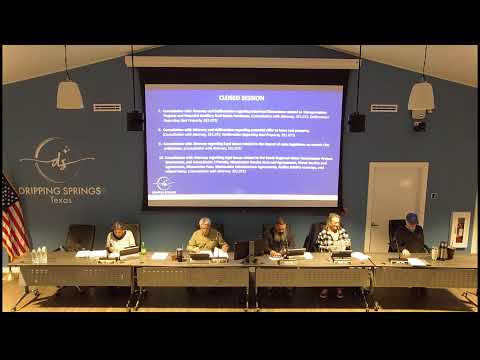
Council discussed whether converting multi‑use spaces to single‑user rooms (locks) could avoid designation requirements. A council member asked to take additional attorney questions in closed session under the attorney‑client consultation and real property deliberation provisions of the Texas Open Meetings Act. After the closed session the council returned and a motion was made and seconded to adopt the resolution implementing the state mandate; the provided transcript ends shortly after and does not record the result of that motion.