Flower Mound fire chief outlines staffing pressures, a squad pilot and rising apparatus costs
Loading...
Summary
At a town work session Chief Henley said the fire department handled about 7,452 calls last year, is budgeting about $32.5 million (about 24% of the general fund), and plans a pilot 'squad' to reduce wear on heavy apparatus and better match resources to medical runs.
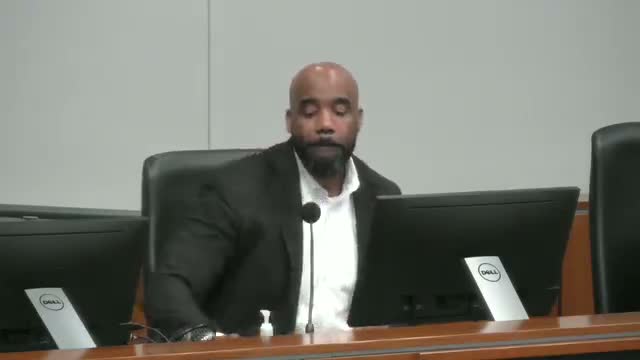
Chief Henley told the Flower Mound mayor and council at a Feb. work session that the fire department is balancing high call volume and personnel costs while maintaining an ISO Class 1 rating. "We have 148 full time employees," Henley said, describing staffing, seven active stations and plans for an eighth.
The department presented operations and budget context. Henley said the department’s budget was presented in the materials as roughly $32,500,000 and represents about 24% of the town’s general fund. He emphasized that about 60% of the department’s calls are medical in nature and that the department ran 7,452 calls last year, projecting roughly 7,500 calls in 2025.
Why it matters: medical calls and false alarms drive much of the workload and affect staffing models and apparatus wear. Henley said the department has an ISO 1 rating — a designation he tied to community value and insurance savings — and stressed the training and certification load required to maintain that performance, including paramedic staffing and mandated continuing education.
On EMS revenue and cost recovery, Henley said ambulance charges totaled about $3.6 million while collections were about $1.6 million, calling EMS service a partial‑recovery line. "EMS is always a loss leader," he said, describing both the fiscal tradeoffs and operational benefits of rapid clinical care and hospital partnerships.
Pilot and resource redesign: Henley proposed an east/west 'squad' pilot to answer lower‑acuity and ambulance‑follow calls with a smaller, more economical vehicle rather than a full heavy engine. The squad — described as a brush/Tahoe‑type vehicle or repurposed brush truck — would carry personnel and essential equipment and be evaluated in a short pilot to produce data on response times, cost per mile and apparatus life. "If we were to run this…we can come to council with real numbers," Henley said.
Apparatus procurement and refurbishment: Council members noted industrywide lead‑time and price pressures for new engines, now running multiple years, and Henley said some engines now approach about $1 million. He and staff discussed refurbishment and stock/refurb suppliers as a potential cost‑saving strategy, noting tradeoffs in spare parts availability and long‑term maintenance.
Staff wellbeing and preparedness: Henley described peer support, chaplain programs, family counseling for new recruits and regional clinical resources for behavioral health and stress management. He also outlined regular tabletop and full‑scale exercises and mutual‑aid agreements to handle low‑frequency, high‑impact incidents such as aircraft or derailment events.
What’s next: Henley asked council to endorse a small pilot and directed staff to return with specific metrics and budget implications. The council expressed support for evidence‑driven pilots and asked staff to quantify operational savings, response benefits and impacts to apparatus life expectancy.