Get Full Government Meeting Transcripts, Videos, & Alerts Forever!
Get email alerts on the Ems Billing topic
No spam. Unsubscribe anytime.
Flower Mound reviews EMS billing and revenue options as costs outpace reimbursements
Summary
Fire and EMS leaders briefed council on billing operations, payer mix and options to increase revenue, saying cost per call is about $2,100 while average cash per transport is roughly $494. Consultants recommended fee updates, prompt‑pay discounts and a targeted heavy‑deployment billing program (EmergeFire).
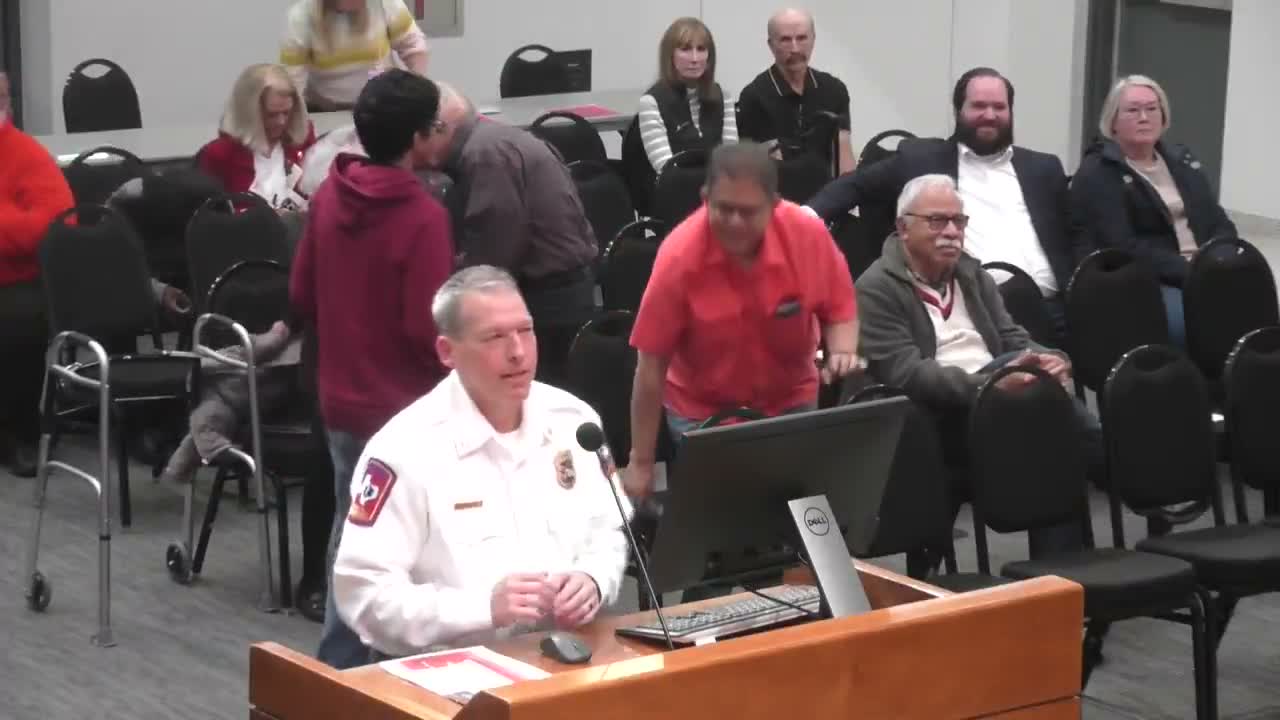
Fire Chief Paul Henley and the town’s EMS billing vendor presented an overview of current EMS billing practices and potential revenue options at Wednesday’s work session.
Chief Henley said the department applies rigorous documentation and medical‑necessity review to runs before billing and that Deputy Chief Robert Adcock oversees quality control of patient care reports. Henley said town medics should focus on care and documentation while billing experts optimize reimbursement.
Jimmy White, vice president of Emergicon, described the town’s payer mix and revenue drivers: Medicare represents the largest share of reimbursements, commercial insurance makes up roughly 26.6% of transports, and private pay collections are low. Emergicon reported an average cash per transport of about $494 and noted that older claims (over 120 days) have very low collection rates. White summarized typical interventions in coding and emphasized human review of charts rather than full automation.
Chief Henley said the department estimates the cost per call at about $2,100 and that current reimbursements cover only a fraction of that. "We do not balance bill our residents; we do balance bill nonresidents," he said, explaining the town’s policy and noting legal constraints like Texas Department of Insurance rules and the federal No Surprises Act.
Consultants recommended several actionable options: updating the fee schedule to better capture commercial reimbursement, prompt‑pay discounting to improve payment rates, and exploring EmergeFire (a program to bill insurance for heavy deployments such as major vehicle accidents and hazardous‑materials responses). Emergicon also offered sample ordinance language for fees and false‑alarm enforcement, which staff said could be packaged into upcoming budget or midyear fee updates.
Council members asked about implementation timing and resident impact. Staff said fee updates can be brought forward outside the budget cycle but that a comprehensive midyear amendment is often practical to minimize multiple ordinance changes. Staff also said a survey will go out to council and stakeholders to gauge the preferred approach to cost‑recovery and fee policy.
What’s next: staff and consultants will return with more detailed proposals and recommended fee schedules and will include legal and resident‑impact analyses before any ordinance or rate change is brought to the council.