
Elementary curriculum lead asks board for funding to support new coaching, interventions and K–12 adoptions
Get AI-powered insights, summaries, and transcripts
Subscribe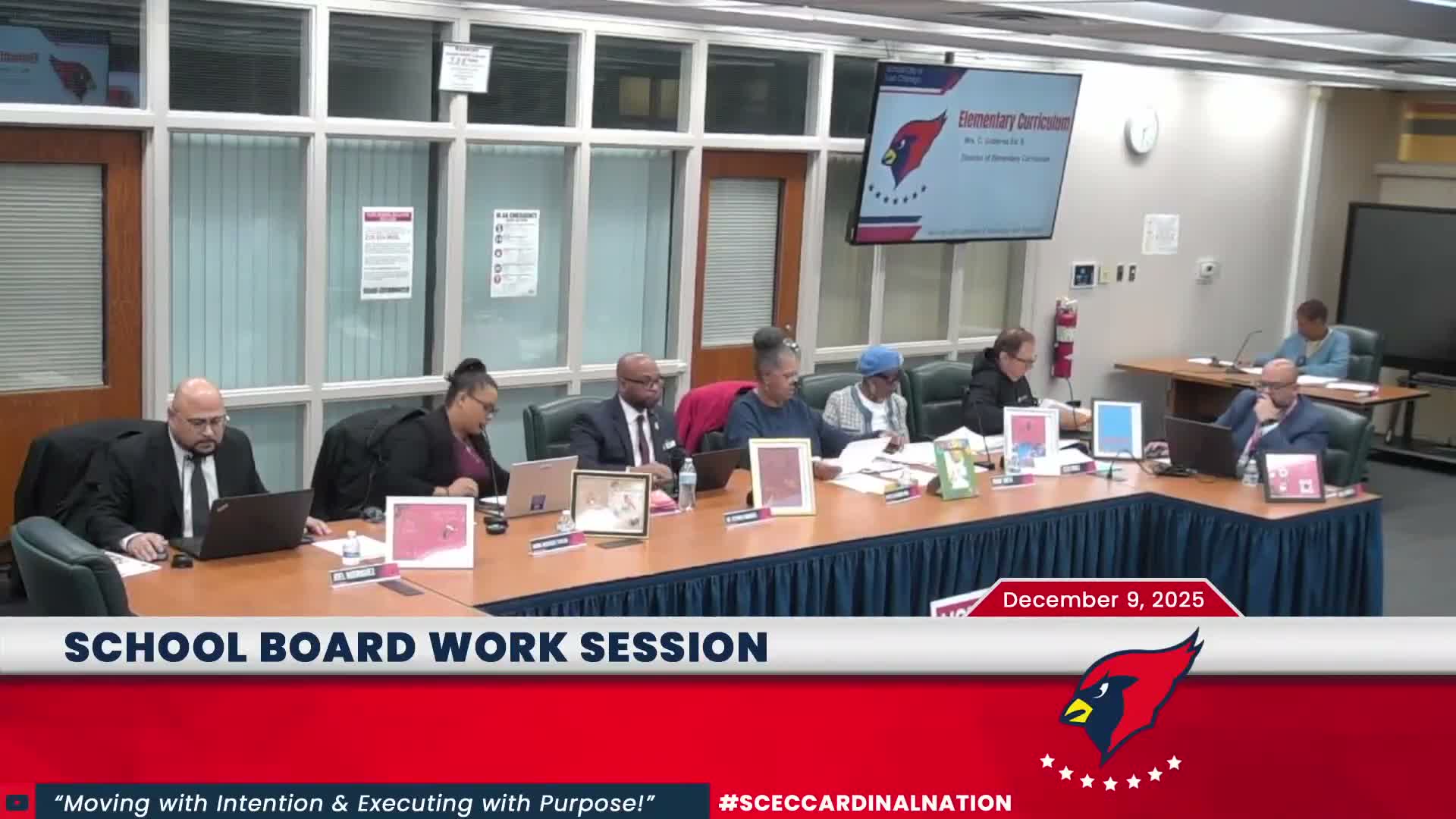
Summary
At the Dec. 9 School City of East Chicago meeting, elementary curriculum lead Christine Gutierrez outlined district-wide assessments, new content-specific coaching roles, departmentalizing for grades 5–6 and planned K–12 science and social studies adoptions, and asked trustees to prioritize funding and professional learning supports.
Christine Gutierrez, the district’s elementary curriculum lead, told the School City of East Chicago board on Dec. 9 that the district has revised curriculum maps, rolled out district‑wide assessment calendars and is expanding targeted reading interventions to improve elementary outcomes.
Gutierrez said current elementary enrollments are Harrison 376, Lincoln 312, McKinley 493 and Washington 448 and described staffing patterns that generally include a principal, assistant principal, dean, instructional coach, social worker and interventionist — while noting an interventionist vacancy at Harrison and an assistant-principal vacancy at Lincoln.
She described a coordinated model of short, standards‑based formative assessments and a predictable benchmarking calendar intended to reduce instructional interruptions and provide regular progress monitoring. Gutierrez said the district has aligned scientifically‑researched reading interventions and named Reading Horizons and Reading Elevate as primary supports used during scheduled "win time" and in dedicated Reading Horizons labs for students needing intensive phonics and fluency work.
"This is to make sure that our kids are getting the remediation intervention they need," she said, describing Tier 1–3 supports under the district’s MTSS/RTI framework.
Gutierrez outlined a staffing and instruction shift that departmentalizes fifth and sixth grades to strengthen content expertise and smooth transitions into middle school. The district also created content‑specific instructional coach positions this year so coaches can focus on math or ELA and provide job‑embedded professional development.
She said the district developed a districtwide instructional framework this summer with administrators, directors, teachers and coaches; the framework establishes non‑negotiable expectations across elementary, middle and high schools.
Gutierrez asked the board to prioritize funding for curriculum renewals, professional learning and the adoption process, noting a committee timeline that aims for a May decision on K–12 science and social studies adoptions. "When we are asking for things in the curriculum realm... it be prioritized for what our kids need," she said.
Trustees asked how teachers provide feedback on curriculum implementation. Gutierrez said she attends PLCs, visits classrooms, and receives direct outreach from teachers and coaches; principals receive building-level data and are expected to cascade the format to teacher teams. She also explained how the district handles students who did not pass third grade, pointing to Reading Horizons labs, progress monitoring and case‑conference decisions that use "good cause" exemptions when applicable.
Next steps include committee reviews of vendor materials for science and social studies, ongoing professional learning to support implementation, and continued monitoring of student data to assess the impact of departmentalization and coaching.