Get Full Government Meeting Transcripts, Videos, & Alerts Forever!
Get email alerts on the Personnel Discipline topic
No spam. Unsubscribe anytime.
City Service Commissioners uphold discharge of accounting manager in fraud-related case
Summary
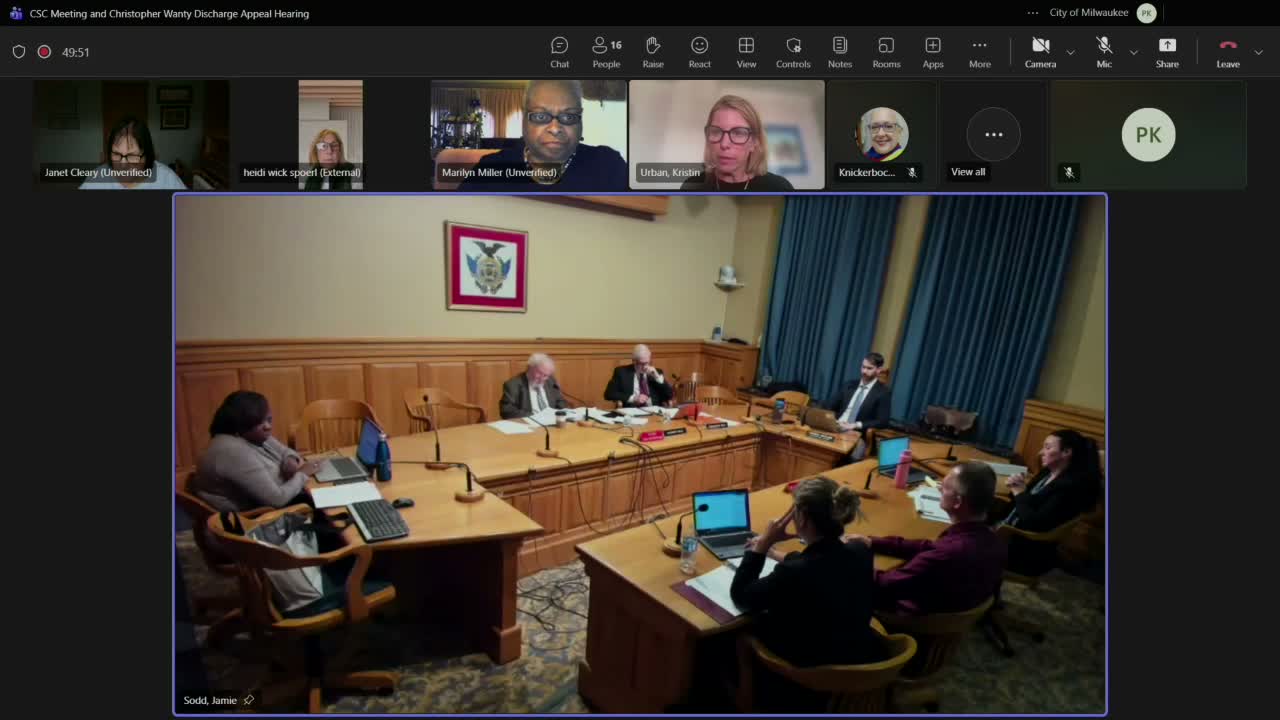
After two days of testimony and evidence about missed email warnings tied to a vendor fraud scheme, the Board of City Service Commissioners voted to deny the appeal of accounting manager Christopher Wante and uphold his discharge, following closed-session deliberations.
The Board of City Service Commissioners voted Nov. 18 to deny the discharge appeal of Christopher Wante, the comptroller's office accounting manager, upholding a department termination that followed a multimonth string of emails about a vendor fraud scheme.
The vote followed a resumed appeal hearing in which witnesses, documentary exhibits and argument were heard. Commissioners polled publicly and, after deliberating in closed session, found by a preponderance of the evidence that the department had cause to discipline and to discharge Wante; the board also voted to waive the city's one-year waiting period so he may apply immediately for open competitive positions.
Why it matters: The case centered on whether Wante's failure to escalate or investigate repeated email warnings about a compromised vendor account contributed to a later fraud that resulted in substantial city losses. The department argued the failure to act over multiple notices and months was a pattern of inaction; Wante's counsel argued the errors were omissions, not deliberate misconduct, and that progressive discipline rather than discharge was appropriate.
What the record shows: Department counsel emphasized a sequence of emails in February, March and May 2025 discussing suspected compromise of Walnut Way vendor payment information and presented an ACH vendor-authorization form (admitted as exhibit D15) the department says included multiple obvious errors. In closing, department counsel stated the city was defrauded "approximately $500,000," and urged commissioners to find discharge appropriate because the appellant had multiple opportunities to escalate the issue but did not.
Witnesses who testified for the appellant included Therese Fearnaught (introduced in the hearing as Therese Biernat), a former business finance manager who said she worked with Wante for decades and described him as competent and professional, and Richard "Rick" Baer, the accounts director for the comptroller's office, who testified he supervised Wante, called him technically competent and said, in his view, termination was not the appropriate response for the conduct shown in the record.
In cross-examination the department questioned whether Wante had seen or acted on the series of emails and whether he had uploaded required resiliency-project procedures to OneDrive. Wante and his counsel acknowledged he had not perfected those procedures and said he would have handled matters differently in hindsight.
Both sides stressed different standards: the department repeatedly argued that repeated failures to escalate and to follow clear steps warranted discharge; defense counsel stressed Wante's 26 years of city service, prior work that helped secure unmodified audit opinions, and asked commissioners to apply progressive discipline.
The vote and next steps: After returning from closed session, the commission voted to find cause to discipline by a preponderance of the evidence and then voted to uphold the discharge and to waive the one-year reapplication bar. The chair announced the appellant's appeal was denied. The commission also closed the meeting by unanimous vote to adjourn.
Context and limitations: Numbers cited at the hearing (including the department's "approximately $500,000" figure and later references in argument to additional losses) were presented as part of the department's case; the commission's finding addressed whether cause for discharge existed based on the weight of evidence presented at the hearing, not criminal liability. The commission did not announce any criminal referral during the open-session disposition.