Get Full Government Meeting Transcripts, Videos, & Alerts Forever!
Get email alerts on the Pro Se Citizen Complaints topic
No spam. Unsubscribe anytime.
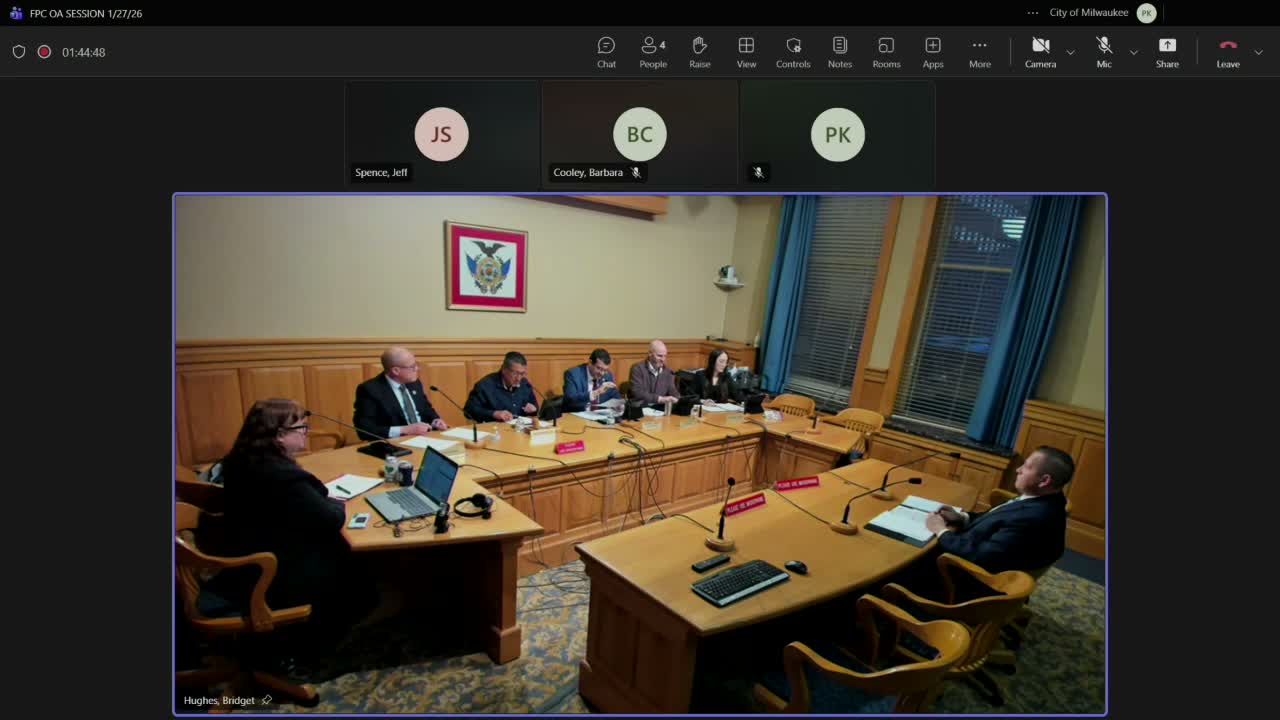
FPC discusses options to help pro se citizen complainants navigate trials under statute 6250
Summary
The committee reviewed difficulties some citizen complainants face prosecuting their own cases under Statute 6250 and discussed a pro se guide, referral lists and possible partnerships with Marquette Law School's legal clinic to improve access and fairness.
Committee members and staff discussed how citizen complaint trials under statute 6250 can disadvantage complainants who proceed without legal representation, and they explored low-cost support options.
Staff explained the legal backdrop: statute 6250 authorizes the FPC to hear citizen complaint trials that can result in independent discipline. "The complainant basically has to prosecute their own case at the citizen complaint trial, which can be difficult for someone who's pro se," the director said, describing motions and pretrial procedures that can overwhelm nonlawyers.
Commissioners recounted a past case in which a pro se complainant struggled with pretrial motions and was ultimately dismissed after repeated interruptions and procedural problems. Staff proposed alternatives to provide better access: a factual, nonlegal pro se guide or handbook; a referral list of potential pro-bono or low-cost advocates (the FPC would not assign counsel); or outreach to Marquette Law School's clinical program so 2L/3L students could represent complainants or others who lack counsel.
Deputy Director Jane Pusick and commissioners discussed safeguards and perceptions: staff emphasized they would avoid creating the appearance of recommending counsel to "get someone in trouble," and commissioners asked that departments, unions and stakeholders be consulted before implementing any referral program.
Several commissioners supported pursuing clinic partnerships and guidance materials to help pro se participants present their cases effectively. The committee asked staff to continue work on options and return with more specifics at a future meeting.