Get AI Briefings, Transcripts & Alerts on Local & National Government Meetings — Forever.
Dallas Water Utilities outlines 50‑year water plan, warns of supply gap without IPL and conservation
Loading...
Summary
Dallas Water Utilities presented a 50‑year Long Range Water Supply Plan showing conservation, indirect reuse, regional swaps and the Integrated Pipeline as central strategies; staff warned a shortage would occur by 2040 if key regional projects are not completed.
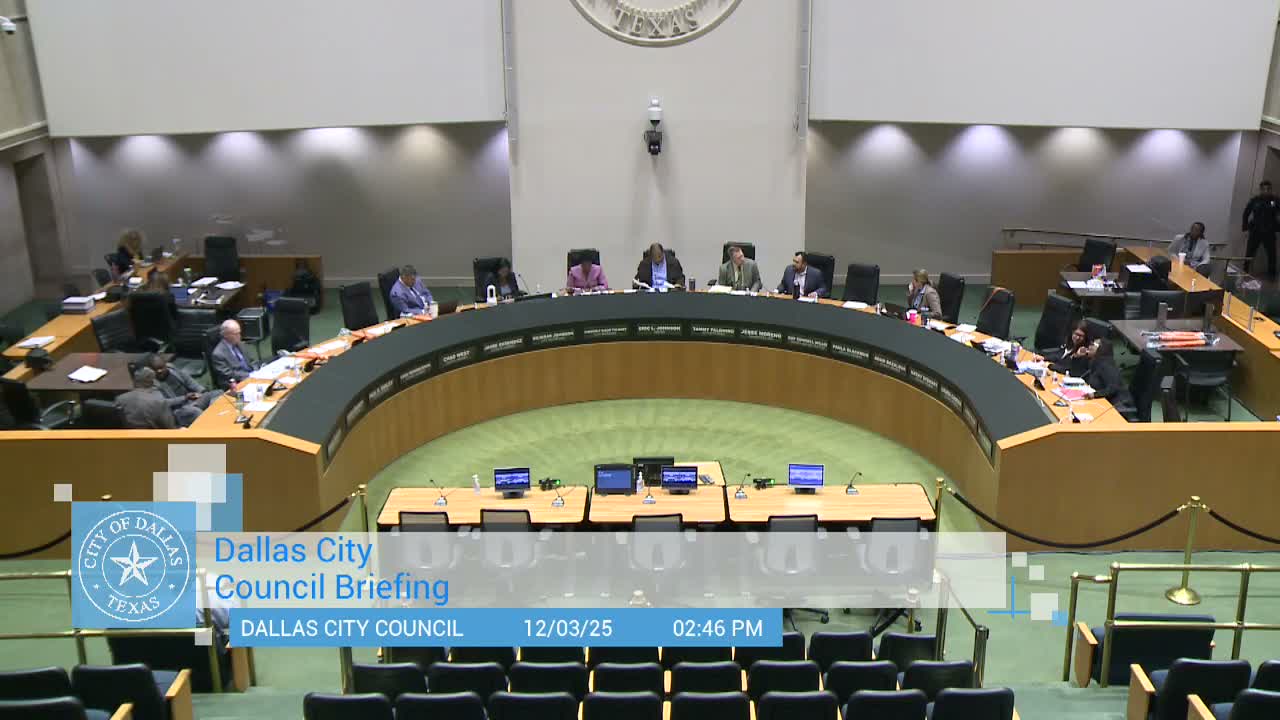
Dallas Water Utilities presented an update to its 2024 Long Range Water Supply Plan to the Dallas City Council on Dec. 3, outlining a multi‑decade portfolio of conservation, reuse, connections to existing supplies and new surface water projects intended to meet regional demand through 2080.
Director Sarah Standiford said the utility serves about 2.6 million customers across 27 municipalities and stressed that the city’s existing supplies are the least expensive and most feasible to use. "The water we have today is the cheapest water you’re going to have," she said, and added that each incremental supply comes with higher capital and environmental permitting costs.
Standiford and Deputy Director Matt Pink described the plan’s composition: additional conservation will account for roughly 13% of the recommended strategies; indirect reuse (including a proposed swap with the North Texas Municipal Water District to increase available reuse in Lake Ray Hubbard) about 33%; connection to existing supplies (for example, Lake Palestine/Integrated Pipeline linkage) about 23%; new surface water projects about 25% in the long term; and a modest groundwater component (~6%). Staff noted an overall plan cost of roughly $1.7 billion (2024 dollars) for major supply additions.
Councilmembers pressed staff on several issues: timing of any supply shortfalls (staff said a supply gap would appear by 2040 if major projects such as the Integrated Pipeline are not completed), whether conservation measures apply only to Dallas retail customers or also to wholesale customer cities, potential contractual levers in future agreements, and the utility’s ongoing leak mitigation plans. Standiford said Dallas Water Utilities will pilot irrigation rebate programs, propose year‑round time‑of‑day watering rules in spring, finalize a swap agreement with North Texas, and begin feasibility work for a main‑stem balancing reservoir.
On water loss, staff said the most recent water loss audit (completed in May) indicated approximately 10 billion gallons lost in the last year; the utility plans increased leak detection, prioritized pipeline replacement (about 34 miles per year), and the rollout of automated meters over the next five to seven years to improve accounting and reduce loss.
Staff said the Integrated Pipeline connection must be in place by 2040 under current planning assumptions to avoid shortages, and that the city will continue to study both recommended and alternative strategies while working with regional partners. No policy vote was taken—this was a briefing item and next steps include feasibility studies and agreement negotiations to return to council for action.