Get Full Government Meeting Transcripts, Videos, & Alerts Forever!
Get email alerts on the Agriculture Land Use topic
No spam. Unsubscribe anytime.
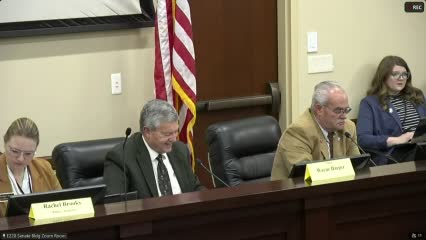
Committee adopts amendment and advances bill limiting state incentives for utility-scale solar on prime farmland
Summary
HB 16, which would bar state incentives for utility-scale solar projects on prime farmland and productive grazing land, moved forward after the committee adopted Amendment 2 (which updated grazing-land definitions). Farmers, grazing permit holders and conservation groups supported the bill as a way to protect agricultural land from market pressure tied to state subsidies.
The Senate committee unanimously recommended House Bill 16, which would withhold state incentives for utility-scale solar projects sited on prime farmland or land of statewide agricultural importance, while permitting development on non-productive or lower-capacity soils. Representative Jack said the measure does not regulate private property use but instead guides where state funds should be deployed.
The committee adopted Amendment 2 to refine grazing-land definitions based on recommendations from Utah State University; the amendment was adopted without recorded opposition. Sponsor and supporters said the change aims to preserve productive grazing and farmland by removing state incentives that had altered local land markets and increased lease rates for agricultural producers. "Removing subsidies in Utah for solar has led to companies coming into our state and entering into agreements for solar farms," Deborah Van Noy of the Utah Agricultural Land Trust said in testimony.
Speakers from Millard County and agricultural stakeholders described cases where large solar proposals would have removed tens of thousands of acres from agricultural use and expressed concern about long-term loss of productive land. County planning officials and grazing allotment representatives urged the committee to favor the bill; the Utah Department of Agriculture and Food said it worked with the sponsor on definitions.
After public comment and questions about zoning, multi-use projects and the scope of state incentives, the committee voted to pass HB 16 as amended with a favorable recommendation to the Senate floor.