Get Full Government Meeting Transcripts, Videos, & Alerts Forever!
Get email alerts on the Nuclear Regulation topic
No spam. Unsubscribe anytime.
Senate committee backs Utah resolution supporting advanced nuclear manufacturing and creates state nuclear regulatory office with safety reporting requirement
Summary
The Senate Transportation committee unanimously recommended HCR 1, a resolution supporting advanced nuclear manufacturing, and passed HB 78 to create an Office of Nuclear Energy Regulation inside DEQ with a new reporting requirement that explicitly include 'safety measures.' Supporters cited jobs and low-carbon benefits; environmental groups urged adherence to federal standards and strong transparency.
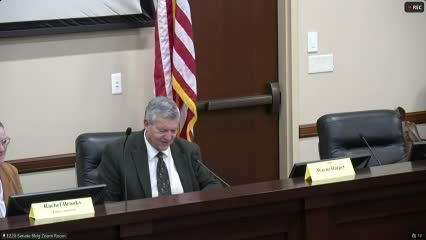
A Utah Senate committee unanimously recommended a resolution expressing the state’s support for advanced nuclear manufacturing and moved forward legislation to create a state nuclear regulatory office, while adding a floor amendment requiring annual reporting to include "safety measures."
Representative Walbrecht introduced House Concurrent Resolution 1 as a statement of support for developing advanced nuclear manufacturing in Utah and said the related bill would help companies overcome challenges in safety, manufacturing, transportation and waste management. "It expresses Utah's desire to support the development of advanced nuclear manufacturing in the state," the sponsor said in committee.
Tim Davis, executive director of the Department of Environmental Quality, told the committee the proposed office would help the state build technical expertise to review and approve parts of the nuclear life cycle and to work with federal regulators. "We believe that it can be done safely and more quickly than it's been done in the past," Davis said. He noted Utah already hosts facilities at both the front and back ends of the fuel cycle, citing the White Mesa uranium mill and a low-level radioactive waste disposal site in Tooele.
Environmental groups and community speakers urged caution. Nathan Hole of the Utah Sierra Club said the federal Nuclear Regulatory Commission sets national standards and warned that a state office could duplicate functions and require ongoing state expenditures. "The Sierra Club opposes HB 78," Hole said, adding that any state rules should treat federal safety standards as a regulatory floor and include robust transparency provisions. Lexi Tudnam of HEAL Utah said recent policy changes at the federal level risk eroding public confidence if they proceed without a public process, and urged the state to adopt a high bar for worker, water and public protections.
During committee consideration members adopted a narrow amendment on the floor to the bill’s reporting language. Senator Kwan offered, and the sponsor accepted, language inserting the words "including safety measures" into the annual implementation report so the report must describe any significant challenges encountered and explicitly address safety.
The committee then voted to recommend both the resolution and the amended bill to the full Senate; minutes record unanimous favorable recommendations. The resolution and bill will next go to the Senate floor for further consideration.