Get Full Government Meeting Transcripts, Videos, & Alerts Forever!
Get email alerts on the Courthouse Security Film topic
No spam. Unsubscribe anytime.
Anderson County officials decry miscommunication after film crew accessed courthouse office space
Summary
County leaders and a film representative sparred over an unsupervised entry into courthouse office space; the filmmaker apologized, said nothing behind the front counter was filmed and deleted behind-the-scenes photos, and the court directed stricter coordination with the sheriff for future productions.
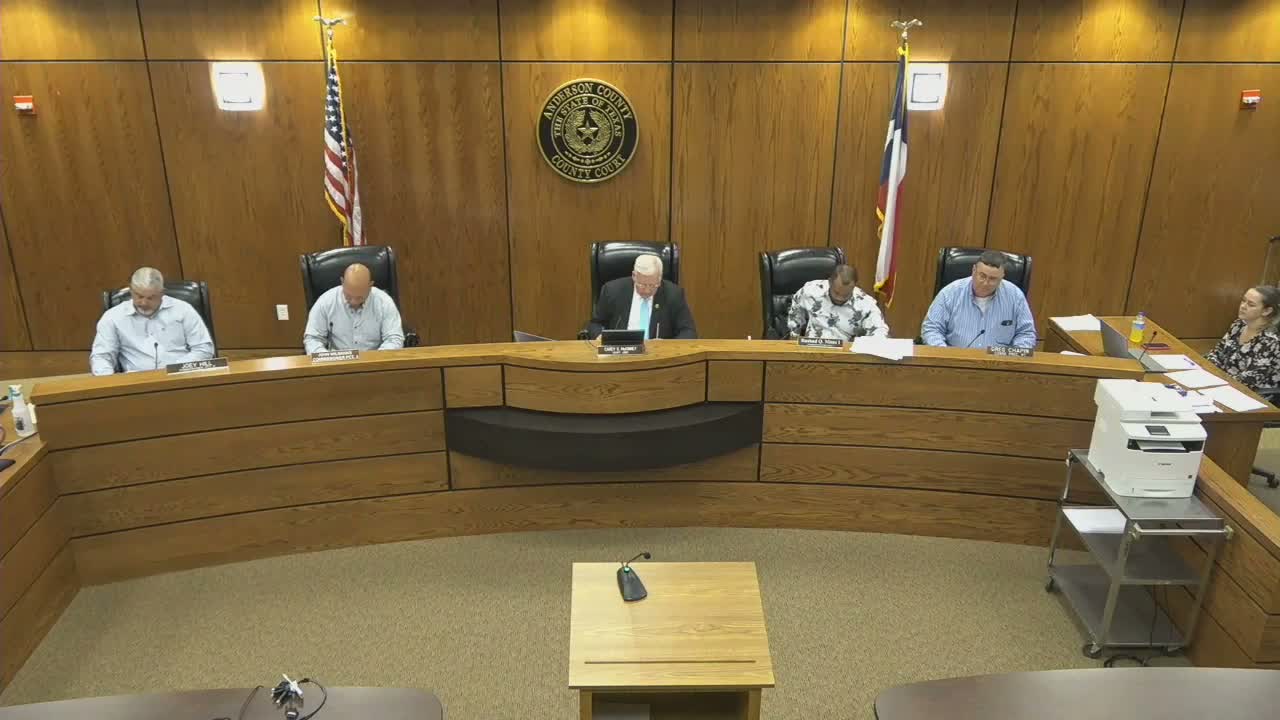
Judge McKinney and county commissioners confronted a film production team after members of the crew entered an office area of the Anderson County Courthouse that the sheriff said he had not authorized.
The court's discussion began when Commissioner Greg Chapin raised concerns that the crew accessed sheriff's offices and areas containing sensitive records during filming. The sheriff told the court he would not have granted access to those offices and said deputies were not present or supervising the area at the time, raising concerns about potential exposure of criminal-history or investigative material.
Kerry (film representative) apologized to the court, said he had assumed permission to use a front counter area for a 1950-period scene and that nothing was filmed behind the counter or into private offices. He said retired law-enforcement personnel were present on set and that behind-the-scenes photographs that had been taken were deleted after the breach was discovered. He described the production as an Anderson County story and said the shoot had brought economic activity to local hotels and restaurants.
Retired officers and other crew members who spoke to the court, including Charles McDonald and David Rabin, said they observed no improper handling of files and vouched for the professionalism of the cast and crew. Nathan Spillman and other presenters later emphasized that the production had sought to respect the site and had cleaned the area after filming.
After extended back-and-forth, commissioners characterized the incident as a communication breakdown: the court had previously authorized use of the courtroom and jury room for filming, but staff (James) inadvertently allowed access earlier than intended and without notifying the sheriff. Commissioners said the sheriff should be notified for any use that might involve private offices or sensitive information, and the court directed that future productions coordinate with courthouse staff and the sheriff to avoid repetition. No disciplinary action or formal vote was recorded regarding the incident.
The court concluded by thanking the filmmakers for their work in the county while emphasizing the need for clearer internal procedures for public-building use going forward.