Get Full Government Meeting Transcripts, Videos, & Alerts Forever!
Get email alerts on the Civil Torts topic
No spam. Unsubscribe anytime.
Senate panel moves to restore pre-Gardner evidence rule after hours-long debate over medical liens and jury information
Summary
After hours of testimony for and against, the committee advanced a first-substitute of SB 211 to restore pre-Gardner collateral-source evidentiary rules; backers say it restores predictability and access to care, opponents say it creates a windfall and may raise premiums.
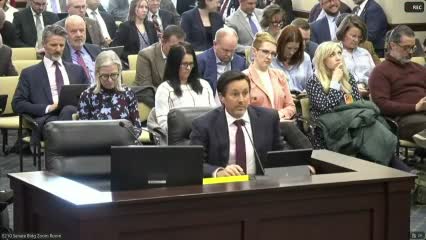
SALT LAKE CITY — The Senate Judiciary Committee voted Jan. 27 to recommend a first substitute for SB 211, a bill intended to restore Utah’s collateral-source evidence practice to its status before the Utah Supreme Court’s October Gardner v. Norman decision. The committee’s vote was 7–1 after a three-hour hearing in which doctors, trial lawyers, insurers, municipalities and business groups debated whether the change restores predictability or creates hidden windfalls.
Sponsor Sen. Curt Cullimore told the committee the bill's purpose is to "set the status quo back" to pre-Gardner practice, so juries consider "amounts actually incurred" rather than negotiated insurance payments. Proponents including the Utah Association for Justice and injury attorneys said the Supreme Court’s decision injected unpredictability into case values, reduced settlements and threatened access to care for uninsured or underinsured patients who rely on medical-liens for treatment.
"Gardner shifts the windfall from injured Utahns to negligent parties' insurance companies," testified Jake Lee of the Utah Association for Justice. Health-care providers and lien-funded clinics said liens are necessary for patients who cannot pay upfront; Dr. Nate Miller, a treating clinician, told the committee that lien providers allow access to treatment that patients otherwise could not obtain.
Insurers, defense attorneys and business representatives argued SB 211 would impose higher payouts and premium costs, and that it goes beyond simply reversing Gardner by limiting impeachment and cross-examination of medical providers who accept liens or third-party funding. Marshall Hendrickson and other defense lawyers noted the Rodriguez v. Diety decision (discussed in testimony) raised concerns about financial bias when providers are paid by litigation-financing companies. Several defense witnesses said the current draft contains language that would bar impeachment on financial relationships, a change they said would reduce transparency.
Sen. Cullimore acknowledged concerns and said the intent was to restore pre-Gardner law; he committed to work on subsection language that some witnesses said went beyond prior practice. The committee approved first-substitute SB 211 with the request the sponsor address language that could hamper impeachment or settlement practice.
Next steps: Sponsor indicated willingness to refine subsection language on settlements and impeachment before floor action; committee voted to favorably recommend first-substitute SB 211 7–1.