Get Full Government Meeting Transcripts, Videos, & Alerts Forever!
Get email alerts on the Energy Infrastructure topic
No spam. Unsubscribe anytime.
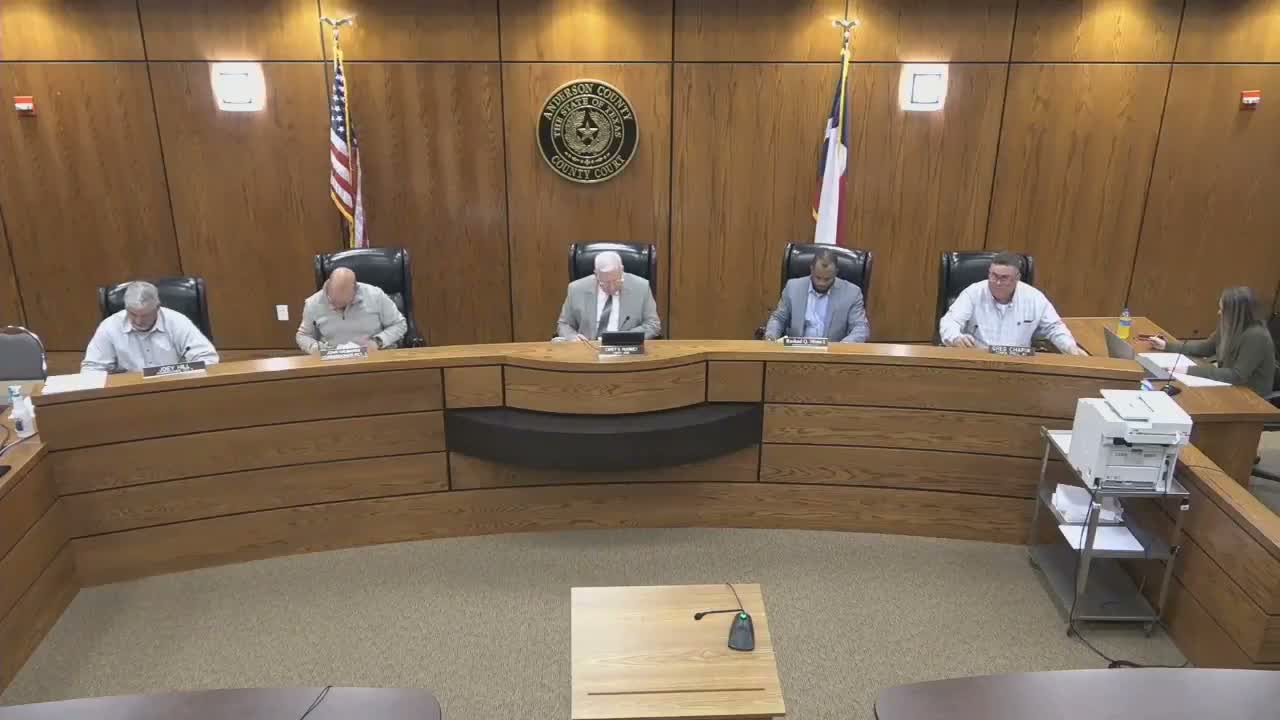
Anderson County creates enterprise zone, approves tax-abatement and road-use agreement for battery-storage project
Summary
The Anderson County Commissioners approved the Anderson County Enterprise Zone (FAMBS) and adopted a tax-abatement and road‑use agreement for a proposed battery‑storage project near Tennessee Colony, a deal county staff said would include a 10‑year, 50% abatement and pilot payments to the county.
Anderson County Commissioners voted Nov. 3 to create the Anderson County Enterprise Zone (FAMBS) and to adopt related agreements for a proposed battery‑storage project the county’s advisors described as up to about 136 megawatts and valued at roughly $81.9 million.
County advisor Bob told the court the project is located near County Road 2802 in the Tennessee Colony area and is expected to be commercially ready “roughly July ’28.” Bob said the draft tax‑abatement structure contemplates a 50% ad valorem abatement for 10 years, after which the property would return to the tax rolls at full assessed value.
“The pilot payment would be on the order of … about $76,000 annually at full capacity, and at 75% capacity it might drop to as little as $57,000,” Bob said. He added that the pilot payment is separate from appraisal and is treated as supplemental budget revenue by the county.
Judge McKinney clarified for the record that the proposed abatement does not reduce school district tax collections: “There is no tax abatement for the school. The school will receive 100% of the taxes,” he said.
The court also approved a standard road‑use agreement intended to protect county roads during construction. That agreement requires the developer to inspect and repair any county roads affected by construction and to deposit a $100,000 contingency fund with the county treasurer to cover potential repair costs. If funds are drawn down the agreement requires the developer to replenish the fund or face contractual remedies.
The county discussed public‑safety issues during an earlier hearing, including thermal fire risk from battery units, off‑gassing and training needs for volunteer fire departments. Developers and county counsel said the containers include onboard monitoring and suppression, that the state requires a decommissioning/remediation fund and that the county will receive annual training payments of up to $10,000 for likely‑responding fire departments.
Formal motions to create the enterprise zone, approve the road‑use agreement and adopt the tax‑abatement agreement passed on unanimous voice votes. The motions were moved and seconded by commissioners on the record and recorded as “aye.”
Next steps include final signatures on the agreements, public‑record retention of executed copies and follow‑up coordination if the developer requests changes to commercial‑online dates or capacity assumptions.