Get Full Government Meeting Transcripts, Videos, & Alerts Forever!
Get email alerts on the Retirement Security topic
No spam. Unsubscribe anytime.
House committee advances voluntary Utah retirement-plan exchange to House floor, 6–1
Summary
A House committee on Feb. 3 recommended HB 250 to the full House, 6–1, sending a voluntary state retirement-plan exchange to the floor. Sponsor and witnesses said the marketplace aims to increase access for small employers without creating a mandate; opponents warned about fees and state selection of providers.
A House committee on Wednesday voted 6–1 to advance HB 250, the Utah Retirement Plan Exchange, sending the voluntary marketplace proposal to the full House.
Representative E listen, the bill sponsor, told the committee the bill would set up a state-backed online exchange to help small employers offer retirement accounts to employees while preserving employer choice and avoiding a mandate. "We're going to set up a state ... 401(k) plan where employers can opt out if they don't want to do it," the sponsor said during the presentation.
Nate Glassy of the American Retirement Association said employee participation rises dramatically when plans are available through payroll: "People are 17 times more likely to contribute to a retirement plan if they have one through their workplace," he said. Glassy told the committee the exchange is intended as a marketplace and that money would flow through private-plan providers rather than through the state.
State Treasurer Marlo Oakes described the exchange as a market-enabled, state-supported option that could reduce long-term public costs tied to inadequate retirement savings. He cited a Pew estimate that inadequate retirement savings could drive roughly $1,000,000,000 in additional state spending in Utah by 2040 if nothing changes and said the exchange would be a market-based tool to improve savings and reduce future fiscal pressure.
Opponents raised concerns about government influence and costs. Ken Ritchie, a financial-services professional from Ogden representing NEFA, urged the committee to slow the bill and consult more stakeholders. He warned that a state-managed exchange could "effectively allow the state to pick winners and losers in the private retirement marketplace" and questioned long-term fees for small employers once temporary federal set-up credits expire.
Committee members pressed sponsors on key points: whether funds would be managed by the state, how ERISA and federal rules apply, whether the program could inadvertently become a mandate, and who would pay for the technology. Glassy and Treasurer Oakes said initial oversight would sit with the Treasurer's Office but that the financial flows and plan management would be handled by private providers, with technology operations likely outsourced. Glassy also noted a forthcoming federal "savers match" program beginning Jan. 2027 that could match contributions for low-income workers (described in testimony as a 50% match up to $2,000).
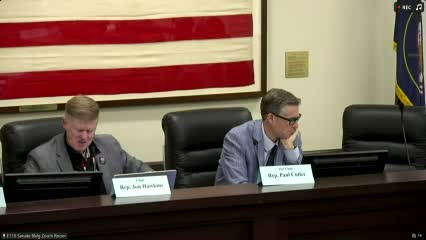
Representative Miller moved the favorable recommendation. A roll-call vote recorded the following: Representative Fia Fia — yes; Representative Hansen — no; Representative Miller — yes; Representative Owens — yes; Representative Shelley — yes; Vice Chair color — yes; Chair Hawkins — yes. The motion passed 6–1, with Representative Hansen voting no.
What comes next: HB 250 will be scheduled for consideration by the full House. The Treasurer's Office and the sponsor said they plan further stakeholder engagement to refine procurement, fee structures and oversight before implementation.
Sources: Committee testimony and public comment during the Feb. 3 committee hearing on HB 250 (presentation by Nate Glassy; testimony by State Treasurer Marlo Oakes; public opposition by Ken Ritchie).