Get Full Government Meeting Transcripts, Videos, & Alerts Forever!
Get email alerts on the School Reintegration topic
No spam. Unsubscribe anytime.
House committee advances bill to extend student reintegration timeline and clarify checklist use
Summary
The House Education Committee voted to recommend HB 310, which extends the timeline for school reintegration plans from five to seven days and clarifies that individualized reintegration plans must still follow existing threat‑assessment and safety checklist requirements. A friendly amendment was adopted to make that intent explicit.
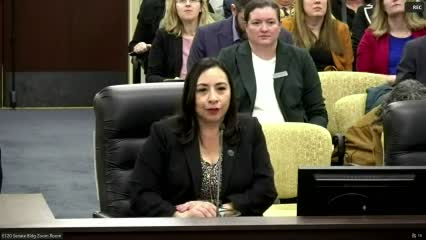
Representative Angela Romero, sponsor of HB 310, told the House Education Committee that the bill ‘‘extends the timeline for developing a reintegration plan’’ from five to seven days to allow time during summer months when staff or contracted providers may be unavailable. Romero said the change is intended to ‘‘provide additional time during summer months for developing the reintegration plan’’ and to allow schools to tailor reintegration plan components to a student’s need and risk level.
The measure prompted questions about whether tailoring plans would permit districts to skip the existing statutory checklist and threat‑assessment protocols. Ben Horstland, superintendent of Granite School District, described the origins of reintegration plans and explained they were created after a violent incident to ensure students who pose a risk do not return to a traditional environment without a safety plan. Horstland said the checklist ‘‘includes following CSTAC protocols, conducting those threat assessments’’ and that the bill does not remove those requirements.
Policy staff and the bill’s drafters told the committee the language as amended does not eliminate checklist requirements. Fin Rose, managing policy legislative researcher, relayed a clarification from the drafter: the substitute language ‘‘does not do that’’ and staff proposed a narrowly drawn amendment to make legislative intent explicit. Committee members accepted the drafting clarification as a friendly amendment.
Representative Moss moved to adopt Amendment 1 to HB 310; the amendment was adopted by voice vote. The committee then voted to recommend HB 310 favorably as amended. There was no roll‑call tally recorded in the transcript and the motion carried by voice vote.
What happens next: HB 310 was recommended favorably by the House Education Committee and will move to the next committee or floor process per House rules. The amendment adopted in committee clarifies that individualized reintegration plans must still address the statutory checklist and threat‑assessment steps cited by districts.
Sources: Committee hearing, Jan. 28, 2026, including sponsor remarks (Representative Romero), Granite School District superintendent Ben Horstland and legislative policy staff.