Get Full Government Meeting Transcripts, Videos, & Alerts Forever!
Get email alerts on the Tif Finance topic
No spam. Unsubscribe anytime.
Consultant tells Goshen redevelopment panel TIF collections near projections, flags appeals and negative-increment parcels
Summary
Baker Tilly presented the commission’s annual TIF reports, reporting 2024 collections near projections, outlining 2026 expectations, and warning that assessment appeals and parcels with negative increment could reduce future TIF receipts.
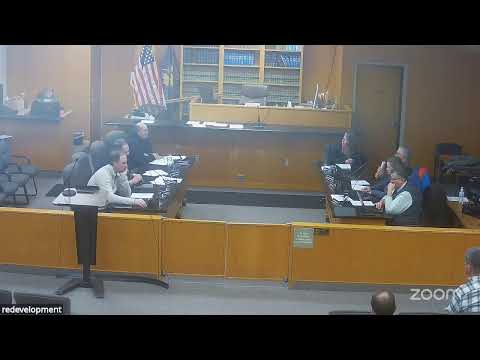
Jason Semler of Baker Tilly presented the redevelopment commission’s annual tax-increment financing (TIF) reports on Dec. 9, outlining recent collections, outstanding obligations and risks to future revenues. Semler said of 2024 collections, “we anticipate about 3,757,000, and you actually collected 3,798,000,” and that 2025 and early 2026 receipts are tracking close to expectations.
Semler reviewed revenue by consolidated allocation areas, bond obligations tied to specific TIF parcels, and potential downside from assessment appeals. He warned of a substantial number of appeals affecting assessed value, noting an initially stated figure of “about $294,000,000 of appeals” that another participant corrected in the meeting. Semler said appeals can significantly reduce captured TIF dollars and urged a conservative approach to projections.
The presentation listed several bonded obligations payable from TIF revenues: a 2015 refunding bond with roughly $2.5 million outstanding at about 2.7% interest, and a project with approximately $24 million outstanding where the developer purchased bonds as an incentive. Semler noted that some project costs came in under budget and that principal reduction of about $1,000,000 is anticipated at the next payment in January.
Semler also identified parcels showing negative increment — where current assessed value is below the original base — estimating about $31,000,000 across roughly 420 parcels, which could reduce captured TIF revenue by nearly $1,000,000 at current tax rates. He said commissions sometimes consider carving fully residential parcels out of TIF maps to avoid ongoing negative increment, but cautioned removal would shift assessed value back into the city tax base and could have unintended consequences for the city tax rate and general fund planning.
Commission members asked clarifying questions about life spans of development agreements, how bond repayment is tied to specific TIF areas, and the effects of statewide property-tax changes (semantically referenced as “SB 1” during the presentation) on exemptions and phased-in deductions. Semler recommended using the detailed 50-page report provided by Baker Tilly for cash-flow planning and to be cautious in revenue forecasting while appeals are unresolved.
Next steps cited by staff included distributing the digital reports and using the projections when evaluating future projects and bond schedules.