Get Full Government Meeting Transcripts, Videos, & Alerts Forever!
Get email alerts on the Judiciary topic
No spam. Unsubscribe anytime.
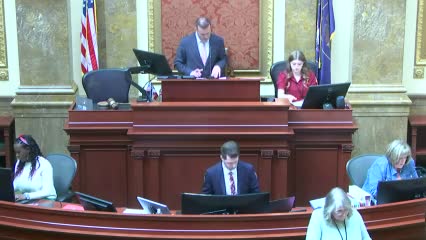
Utah House approves court-expansion bill after debate over costs and backlogs
Summary
The Utah House passed second substitute Senate Bill 134, adding judicial positions and technical court changes. Supporters said the move addresses judicial capacity; opponents warned of ongoing facility and salary costs, citing a $793,000 annual fiscal note and potential Matheson Courthouse renovations.
SALT LAKE CITY — The Utah House voted to pass second substitute Senate Bill 134 on Jan. 29, advancing a package of court amendments that adds judicial positions and makes technical changes intended to speed case handling.
House sponsor Representative Snyder opened debate by saying the bill responds to a request from the chief justice for resources to make courts “more efficient, more effective, and more responsive.” He described provisions that add Supreme Court justices, Court of Appeals judges and district court judges and asked colleagues for support to address growing judicial workload.
Representative Tracy Miller spoke in opposition, saying the bill included elements he supported but that expanding the Supreme Court would create significant, permanent expense. “This fiscal note... $793,000 to pay for the salaries of Supreme Court justices and their clerks,” Miller said, and warned that expanding the Matheson Courthouse would require costly office reconstruction. He urged lawmakers to target resources to clerks and district court judges, who ‘‘interface with the public.’”
Representative Stoddard questioned how many cases the Supreme Court decides and argued the district courts face a larger backlog than appellate courts; he said adding more justices could increase complexity and debate time. Snyder acknowledged he did not have exact caseload numbers on the floor but said additional judges for lower courts are included in the bill and that more judicial capacity should help resolve delays.
Representative Pucci urged support, noting that many states have seven or nine justices and that Utah’s five-member Supreme Court dates to 1917. Sponsor Snyder summarized by saying there are ‘‘not enough resources within our courts’’ and argued ‘‘seven sets of eyes reviewing the most complex and difficult issues’’ would be preferable as the state grows.
The House approved the measure on a recorded vote, 57-18. The bill will be transmitted to the Senate for concurrence and the governor’s consideration under the normal legislative process.
What remains unclear from floor debate was a precise, up-to-date count of the Supreme Court’s caseload and how the state will stage any required facility work; lawmakers referenced the Matheson Courthouse as designed for a five-member court and said adding seats would likely require office construction and renovation.