Get Full Government Meeting Transcripts, Videos, & Alerts Forever!
Get email alerts on the Education Policy topic
No spam. Unsubscribe anytime.
Senate advances bill that makes 'no-phone' the default in Utah schools unless districts opt in
Summary
First substitute Senate Bill 69 passed the Senate third-reading vote after sponsor Lincoln Fillmore argued the bill sets a new baseline banning cell phones in schools unless districts proactively allow them; senators questioned scope and exceptions for safety and classroom technology.
The Utah Senate advanced first substitute Senate Bill 69, a bill that alters the statewide baseline for school device policy so that cell phones would not be allowed during the school day unless a local school district or charter school affirmatively permits their use.
Sponsor Sen. Lincoln Fillmore told the chamber the change aims to reduce classroom distraction and improve student interactions. "Cell phones are not allowed in schools, unless a district proactively allows them," Fillmore said, adding local districts retain authority to create exceptions for curricular uses and for students with individualized needs.
The bill drew questions from several senators. Sen. Wyler asked whether last year’s preservation of local control remained intact; Fillmore pointed to language allowing local-education agencies to establish policies and exceptions. Sen. Riebe asked whether the bill’s definition of "emerging technology" could unintentionally restrict classroom robotics or AI; Fillmore replied the bill excludes devices provided by the school and that robotics teaching scenarios would not be the bill’s target. Senators Eby and others raised concerns about families that depend on phones for safety or communication and cautioned against overly broad, one-size-fits-all rules.
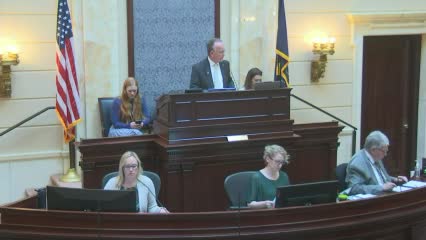
In his summation, Fillmore cited Granite School District’s experience with device restrictions and said the measure supports interpersonal skills and classroom readiness. He moved that the bill be read a third time. The Senate approved the motion and passage on third reading by roll call: 26 yay, 0 nay, 3 absent, as recorded in the transcript.
What happens next: The bill moves forward in the Legislature for any remaining steps required by the Senate calendar and eventual consideration by the House if applicable.