
Subcommittee carries HB 12 94 over to 2027 after sharp split between transparency advocates and law‑enforcement groups
Get AI-powered insights, summaries, and transcripts
Subscribe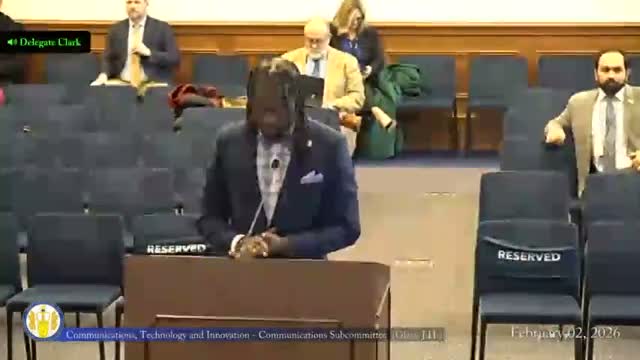
Summary
HB 12 94 would require disclosure and labeling when AI tools materially affect criminal investigations or police reports. The bill drew support from civil‑liberties and academic groups and strong opposition from prosecutors, chiefs and sheriffs citing discovery conflicts, victim safety and fiscal impact; the subcommittee carried the bill over to 2027 for further work.
Delegate Delia Clark presented HB 12 94, a transparency measure that would require police to disclose when AI tools materially affect an investigation or are used to draft police reports and to label AI‑generated content in case records.
Supporters — including the Policing Project at NYU School of Law — argued disclosure is essential to prevent AI‑generated errors from entering criminal proceedings without opportunity for defense scrutiny. The supporter said compliance could be as simple as checking a box on a police report.
Multiple law‑enforcement organizations and the Commonwealth's Attorneys objected. The Commonwealth's Attorneys’ representative said the bill would conflict with discovery practices, require extra report production in cases that currently have none, and risk victim and witness safety if reports were distributed without protective safeguards. The Commonwealth's Attorneys’ council estimated an additional fiscal workload of $6,300,000; chiefs, sheriffs and state police urged further study and asked for narrower, targeted rules instead of broad mandates.
Committee members proposed friendly amendments to clarify when an official police report is required, allow restricted dissemination of sensitive material, and house enforcement with the Attorney General’s Office. After discussion the subcommittee voted to carry HB 12 94 over to 2027 to allow more stakeholder work.
Next steps: The bill will be revisited in 2027 to allow additional drafting and stakeholder consultation.