Virginia subcommittee pauses bill that would require magistrates be told of temporary detention orders after fatal case
Loading...
Summary
The House Courts Subcommittee advanced work on HB 240, which would require judicial officers to attempt to obtain and review criminal histories and any emergency custody (TDO) orders provided by law enforcement. The bill was sent back for further drafting after family testimony and concerns about possible delays in magistrate proceedings.
The House Courts Subcommittee on Criminal Law on [date] reviewed HB 240, a bill aimed at ensuring magistrates learn when a person has an active temporary detention order (TDO).
Delegate Gardner, the bill patron, told the subcommittee that his bill would make judicial officers 'attempt to obtain and review the person's criminal history and any emergency custody orders' and would require law enforcement to provide information when they have knowledge of such orders. Gardner cited the July 2023 case of Charles Byers, saying that hospital staff did not relay Mr. Byers' TDO to police and that 'had the magistrate known that he was under a TDO, Charlie would be alive today.'
Committee counsel and Eileen Longenecker of the Office of the Executive Secretary explained the drafting details: magistrates do not have direct access to all mental-health orders, so the proposal depends on officers providing those orders when available. Counsel recommended inserting wording to clarify that judges 'attempt to obtain and review' criminal histories and 'review' any emergency custody orders provided to them.
Legal Aid Justice Center attorney Mayzie Osteen testified in opposition, saying she appreciated the bill's intent but warned the language could cause 'delays in a lot of magistrates setting bond across the board' by requiring magistrates to seek additional records during rapid first-appearance processes. Online counsel echoed those delay concerns and noted the bill would apply to all judicial officers, not only magistrates.
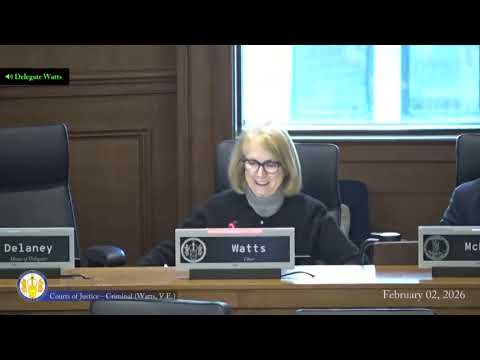
After discussion, Delegate Delaney moved that the amended HB 240 'go by for the day' to allow the patron and stakeholders time to refine language to avoid unintended delay. The motion carried; the bill will be revised before returning to the subcommittee.
What happens next: The patron has indicated willingness to work with counsel and stakeholders on clarified drafting; the subcommittee took no final vote on the substance and left the bill 'by for the day.'