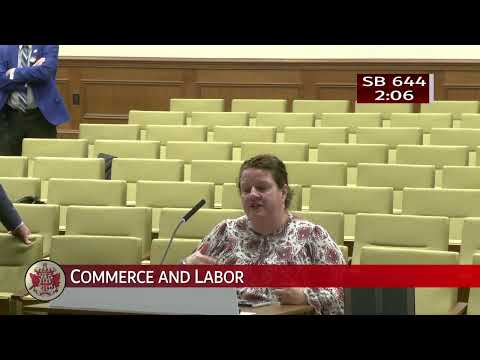
Senate committee advances package of worker-safety and leave bills, including paid-family-leave vehicle
Loading...
Summary
The Senate committee moved a package of labor and safety bills — including a framework for paid family and medical leave, a substitute for paid sick leave, heat-illness workplace standards and a warehouse transparency measure — and sent several items to the Finance Committee for fiscal review.
A Virginia Senate subcommittee on Tuesday advanced a cluster of bills aimed at expanding workplace protections and benefit access for employees, voting to report some measures and refer others to the Senate Finance Committee for fiscal analysis.
The committee voted to report a substitute for a paid family and medical leave framework that would create an insurance-style fund and provide up to 12 weeks of wage-replacement benefits for eligible workers, with an actuarial study to set contribution rates and solvency rules. Sponsor Sen. Jennifer Carroll Foy said the plan mirrors eligibility used by the Virginia Employment Commission and is designed to be implemented with an initial actuarial estimate; supporters said the program could provide stability for workers who cannot afford unpaid leave.
Lawmakers also moved forward competing paid-sick-leave proposals and a combined vehicle incorporating shorter-term family sick-day coverage. Sen. Favola’s substitute included phase-ins by employer size and a cure period for inadvertent employer errors; Carol Foy’s amendment to preserve short-term family care protections was adopted. Opponents from the business community requested clearer certification timelines and asked that collective-bargaining and federal interactions be tested in Finance.
On worker safety, the committee reported a substitute to set heat-illness standards for workers in high‑exposure jobs, directing rulemaking to include access to water, rest and shade and making clear certain emergency responders are exempt. The measure drew technical questions about whether a single 80-degree threshold is preferable to a wet‑bulb‑globe or wet‑bulb measurement; sponsors said the substitute was drafted to avoid duplicating federal rules and to direct the Department of Labor to develop workable measures.
The committee also reported SB 120, a transparency and accountability bill for warehouse employers that would require disclosure of quotas and speed-monitoring practices; unions and worker advocates urged the change as a step to reduce injury rates, while chambers of commerce and logistics groups warned it could invite litigation and regulatory uncertainty.
The subcommittee sent the paid-family, sick-leave and heat-illness bills to Senate Finance for fiscal analysis. Lawmakers said they expect to refine technical definitions — including domestic‑partner rules for family coverage, certification timelines and how state and local governments would be phased into any employee-contribution program — as the bills proceed.