Get Full Government Meeting Transcripts, Videos, & Alerts Forever!
Get email alerts on the Higher Education Endowment topic
No spam. Unsubscribe anytime.
Senate panel refers plan to use VA 529 surplus to fund college scholarships
Summary
A Senate subcommittee referred SB 375, which would move most of an estimated $1.4 billion VA 529 surplus into a new Virginia College Opportunity Fund to generate scholarship earnings (80% for four‑year institutions, 20% for community colleges); bill excludes UVA, Virginia Tech and William & Mary and drew support and technical concerns from Commonwealth Savers Plan.
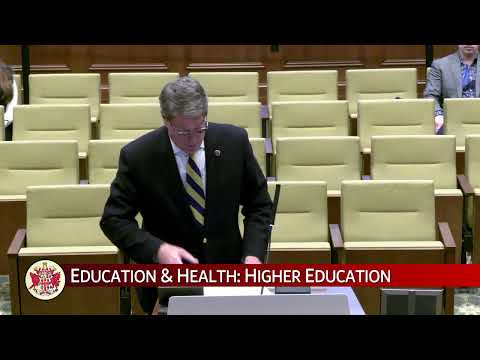
Senate subcommittee members voted to send Senate Bill 375 to the full committee after a presentation outlining a proposal to create a Virginia College Opportunity Endowment funded by surplus assets in the VA 529 plan.
Senator Veil introduced SB 375, saying an independent review by JLARC shows the VA 529 plan’s assets equate to roughly 194% of actuarial obligations — well above the roughly 125% that an independent actuary described as sufficient. Veil said the bill would transfer the bulk of an estimated $1.4 billion surplus into a new Virginia College Opportunity Fund, manage that principal separately and use earnings over time to fund scholarships. Under the bill’s current text, 80% of scholarship dollars would target four‑year colleges and 20% would support community colleges; a board set by the statute would set program parameters.
Mary Morris, chief executive officer of Commonwealth Savers Plan (the successor agency to Virginia 529), said her organization generally supports the bill’s updated language but urged further work on several provisions. Morris warned that parts of the proposal could effectively convert scholarships into repayable obligations if recipients do not remain employed in Virginia for eight years, and she questioned whether creating a new state agency is necessary when existing entities could administer scholarship distribution and enforcement.
Senator Veil told the committee that the bill excludes the University of Virginia, Virginia Tech and the College of William & Mary from eligibility because those institutions already have unusually large endowments. No public opposition was recorded during the hearing.
After brief discussion, an unidentified committee member moved to refer SB 375 to the full committee for reporting; the motion passed on a voice vote with Senator Ayers recorded as abstaining.
The bill will next be considered by the full committee and may face technical edits during that stage; proponents said the endowment is intended to help smaller Virginia institutions compete for students by generating scholarship funding from the plan’s excess assets.