
Committee advances bill banning compelled pronoun use and limiting gender‑identity training for state employees and contractors
Get AI-powered insights, summaries, and transcripts
Subscribe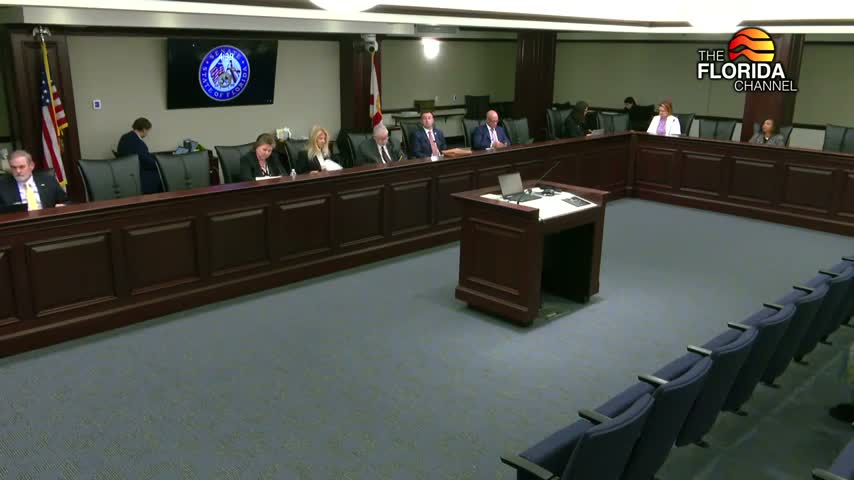
Summary
SB 1642, the "Freedom of Conscience in the Workplace Act," was reported favorably by the committee. Sponsor Sen. McClain told the panel the bill extends conscience protections to public employees and contractors, prohibiting compelled use of preferred pronouns and barring nonbinary options on employment forms; the measure drew lengthy senator questions and dozens of pro‑ and anti‑testimonies.
Senator McClain presented SB 1642, termed the Freedom of Conscience in the Workplace Act, to the Government Oversight and Accountability Committee as an extension of measures placed in school districts in 2023. She said the bill would prohibit conditioning employment on use of preferred pronouns, make it unlawful to take adverse personnel action against an employee for sincerely held religious or conscience‑based beliefs, and bar nonbinary options on certain employment forms.
The bill attracted sustained questioning from committee members about how it would interact with existing discrimination law and workplace harassment protections. Senator Polsky noted the Supreme Court's decision in Bostock v. Clayton County and asked whether the bill could conflict with federal protections for sexual orientation and gender identity; Polsky said, "The Supreme Court ruling in Bostock enshrined employment discrimination protections ... so this law, if passed, will be unconstitutional," and urged colleagues to consider federal precedent.
Witnesses were sharply divided. Supporters framed the measure as protection against compelled speech. "No one should be forced under condition of employment to refer to someone by their preferred pronoun," said Anthony Verdugo of the Christian Family Coalition. Several faith‑based and conservative groups argued the bill would defend workers with deeply held religious objections.
Opponents, including Equality Florida and business and city leaders, warned the bill would license discrimination and create workplace hostility. "This bill authorizes government employers to single out transgender employees for worse treatment than everyone else," said Quinn Diaz of Equality Florida. Fort Lauderdale Mayor Dean Trantelis said the bill distracts from priorities such as insurance, housing and infrastructure and would harm recruitment and retention.
Committee members also pressed for factual grounding. Several senators asked for data on the frequency of adverse employment actions tied to pronoun disputes; the sponsor responded that even a single occurrence merited legislative remedy. Legal experts on the panel pointed to recent federal and circuit decisions that have limited compelled‑speech claims and underscored potential litigation risk.
After testimony and debate, the committee adopted an amendment moving the provisions into chapter 112 of the Florida statutes (public employment) and reported the committee substitute favorably on a roll call.
What happens next: With a favorable committee report, SB 1642 advances in the Senate. Opponents signaled likely court challenges and the bill's interplay with federal law will be central to further debate.
Representative quotes from the hearing: "No one should be forced under condition of employment to refer to someone by their preferred pronoun." — Anthony Verdugo (Christian Family Coalition, supporting SB 1642). "There is no nationwide pronoun mandate and no documented problem this bill would solve." — Quinn Diaz (Equality Florida, opposing). "The Supreme Court ruling in Bostock ... includes gender identity in the definition of sex for employment discrimination law." — Senator Polsky (committee member).
Ending: The committee reported SB 1642 favorably after amendment and extensive public comment; sponsors and critics expect litigation and further committee and floor debate to focus on constitutional and statutory conflicts.