Northwest Little Lake restoration pitched as multi‑project effort after Ida; state and federal partners move to construction
Loading...
Summary
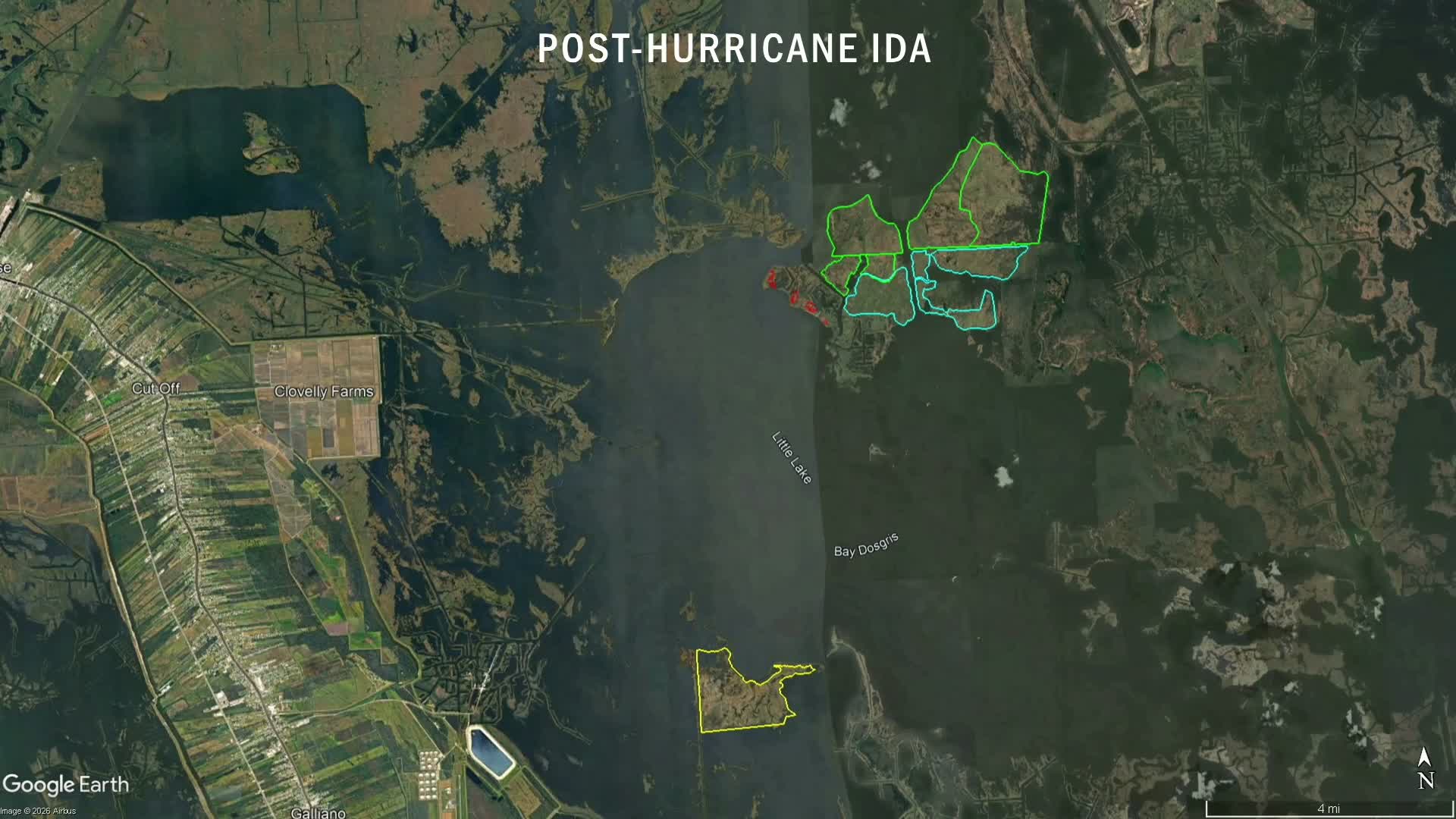
CPRA described a cluster of projects in the Little Lake area—BA260, BA268 and BA276—created after Hurricane Ida. BA260 has construction permits and CPRA expects to advertise bids in 2026; CWPPRA-approved BA268 has phase 2 construction funding recommended by the technical committee.
CPRA engineers gave a focused briefing on Northwest Little Lake restoration, describing how Hurricane Ida (Aug. 29, 2021) transformed previously stable floating marsh into open water and accelerated erosion that now threatens nearby levee systems.
Olivia Creel said an immediate state-led response produced project BA260 (now roughly 650 acres including a terrace-field component) and that collaborative nominations led to CWPPRA projects BA268 (about 370 acres, partnered with U.S. Fish and Wildlife Service and NRCS) and BA276 (about 312 acres). She said BA268 has received phase 2 funding approval from the CWPPRA Technical Committee and BA260 has a construction permit with a CPRA bid package in development for 2026.
Creel described design challenges: deep scour where marsh breached (one breach ~1,000 feet wide and >5 feet deep), soft organic substrates complicating containment-dike construction, a dense network of pipelines that needed magnetometer verification, and recorded shell-midden cultural-resource sites that required avoidance adjustments in alignment. She said the Little Lake work is part of a broader master-plan footprint in the 2023 coastal master plan (about 3,800 acres and 63,000 feet of shoreline protection) with an estimated overall budget of roughly $520,000,000.
Board members asked about temporary mitigation options and timelines; CPRA staff said the state-led BA260 effort will move to construction this calendar year and that temporary measures (such as temporary sacks or other short-term closures) were not part of current design plans but could be considered under emergency conditions.
What’s next: CPRA expects to finalize construction bid packages for BA260 in 2026, NRCS will move CWPPRA-funded projects through federal procurement steps, and agencies will continue to coordinate pipeline, cultural-resource and land-rights issues during permitting and procurement.